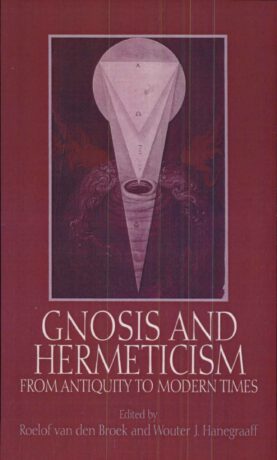
14.05.2022 “Gnosis and Hermeticism from Antiquity to Modern Times” edited by Roelof van den Broek and Wouter J. Hanegraaff Magick Matters "This volume introduces what has sometimes been called the third component of western culture. It traces the historical development of those religious traditions which have rejected a world view based on the primacy of pure rationality or doctrinal faith, emphasizing instead the importance of inner enlightenment or gnosis: a revelatory experience which was typically believed to entail an encounter with one's true self as well as with the ground of being, God. The contributors to this book demonstrate this perspective as fundamental to a variety of interconnected traditions. In Antiquity, one finds the gnostics and hermetics; in the Middle Ages several Christian sects. The medieval Cathars can, to a certain extent, be considered part of ...>> View
14.05.2022 “How to Think Like a Gnostic” by Jeremy Puma Magick Matters "Everything you ever wanted to know about gnosis, but were afraid to ask! In How to Think Like a Gnostic, Jeremy Puma builds upon his previous work in Gnostic philosophy, approaching it as a functional worldview for a solitary practitioner. Breaking down the Gnostic myth to its basic components, Puma clarifies the often inscrutable aspects of Gnostic thought without talking down to the reader. Accessible, interesting, and often humorous, How to Think Like a Gnostic is a must for the library of anyone interested in the Gnostic Way."...>> View
13.05.2022 “The Art of Transforming the Mind: A Meditator’s Guide to the Tibetan Practice of Lojong” by B. Alan Wallace (2022 edition) Magick Matters "Tibetan Buddhist practice isn't just sitting in silent meditation, it's developing fresh attitudes that align our minds with reality. Includes three new translations of Atisha’s source material. In this book, B. Alan Wallace explains a fundamental type of mental training that is designed to shift our attitudes so that our minds become pure wellsprings of joy instead of murky pools of problems, anxieties, fleeting pleasures, hopes, and frustrations. The lojong—or mind-training—teachings have been the subject of profound study, contemplation, and commentary by many great masters. Wallace shows us the way to develop our capacity for spiritual awareness through his relatable and practical commentary on the mind-training slogans."...>> View
13.05.2022 “The Power of the Trumps and Pips: Omnibus Edition” by Camelia Elias Magick Matters "This book is an omnibus edition that gathers three types of texts around the Marseille Tarot: two previously published works out of print, here in re-edited form, unpublished lectures, and new essays. The book features applications of the basic principles of reading the Marseille Tarot to the contextualization of current questions and concerns. The approach to reading the trump, court, and pip cards is informed, first, by observing the rules of formal design and composition as it connects to rhetoric and storytelling, and second, by martial arts in the Zen tradition of deconstructing language. The book offers pragmatic readings in relation to the diviner's larger aim and scope: to see the obvious. The range of ...>> View
13.05.2022 “Reality+: Virtual Worlds and the Problems of Philosophy” by David J. Chalmers (UK edition) Magick Matters "In the coming decades, the technology that enables virtual and augmented reality will improve beyond recognition. Within a century, world-renowned philosopher David J. Chalmers predicts, we will have virtual worlds that are impossible to distinguish from non-virtual worlds. But is virtual reality just escapism? In a highly original work of 'technophilosophy', Chalmers argues categorically, no: virtual reality is genuine reality. Virtual worlds are not second-class worlds. We can live a meaningful life in virtual reality — and increasingly, we will. What is reality, anyway? How can we lead a good life? Is there a god? How do we know there's an external world — and how do we know we're not living in a computer ...>> View