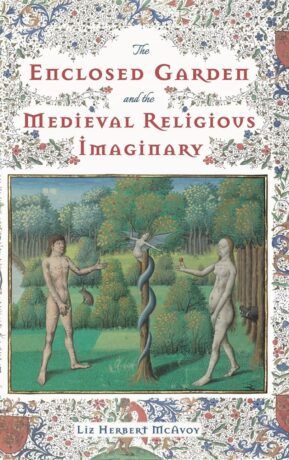
12.02.2022 “The Enclosed Garden and the Medieval Religious Imaginary” by Liz Herbert McAvoy Magick Matters "During the Middle Ages, the arresting motif of the walled garden — especially in its manifestation as a sacred or love-inflected hortus conclusus — was a common literary device. Usually associated with the Virgin Mary or the Lady of popular romance, it appeared in myriad literary and iconographic forms, largely for its aesthetic, decorative and symbolic qualities. This study focuses on the more complex metaphysical functions and meanings attached to it between 1100 and 1400 - and, in particular, those associated with the gardens of Eden and the Song of Songs. Drawing on contemporary theories of gender, gardens, landscape and space, it traces specifically the resurfacing and reworking of the idea and image of the ...>> View
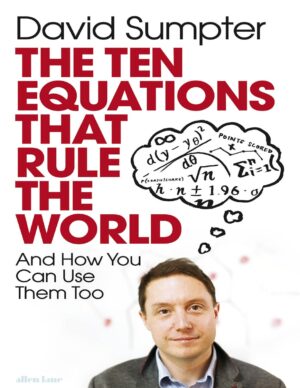
12.02.2022 “The Ten Equations That Rule the World: And How You Can Use Them Too” by David Sumpter (2020 edition) Magick Matters "Is there a secret formula for getting rich? For going viral? For deciding how long to stick with your current job, Netflix series, or even relationship? This book is all about the equations that make our world go round. Ten of them, in fact. They are integral to everything from investment banking to betting companies and social media giants. And they can help you to increase your chance of success, guard against financial loss, live more healthfully, and see through scaremongering. They are known by only the privileged few — until now. With wit and clarity, mathematician David Sumpter shows that it isn't the technical details that make these formulas so successful. It is the ...>> View
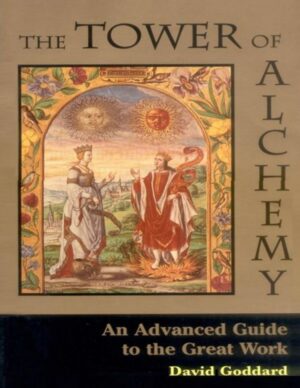
12.02.2022 “The Tower of Alchemy: An Advanced Guide to the Great Work” by David Goddard Magick Matters "The Tower of Alchemy is the first book published in the West to openly reveal the teachings and practice of the Hermetic Art in plain language. In this advanced manual, the alchemical symbols and motifs cease to be a bewildering maze and become helpful signposts on the Path of Liberation. David Goddard clearly explains the interior practices that are the essence of the Great Work itself. By assimilating the knowledge and practicing the exercises contained in this book, you will find that the once-confusing alchemical illustrations are now illuminated mandalas. Using classical Qabalah, and traditions as diverse as the Grail legend, Yoga, and Tibetan Buddhism, Goddard allows students access to the higher Mysteries. His ...>> View
12.02.2022 “The Super Natural: A New Vision of the Unexplained” by Whitley Strieber and Jeffrey J. Kripal Magick Matters "Two of today's maverick authors on anomalous experience present a perception-altering and intellectually thrilling analysis of why the paranormal is real, but radically different from what is conventionally understood. Whitley Strieber (Communion) and Jeffrey J. Kripal (J. Newton Rayzor professor of religion at Rice University) team up on this unprecedented and intellectually vibrant new framing of inexplicable events and experiences. Rather than merely document the anomalous, these authors—one the man who popularized alien abduction and the other a renowned scholar and "renegade advocate for including the paranormal in religious studies" (The New York Times)—deliver a fast-paced and exhilarating study of why the supernatural is neither fantasy nor fiction but a ...>> View
12.02.2022 “The Spirits Book” by Allan Kardec Magick Matters "The Spirits Book (1857), written by Allan Kardec, is widely regarded as the most important piece of writing in the 'Spiritist' canon. It is the first in a series of five books that Kardec wrote that are collectively known as the Spiritist Codification. Although the other four books; The Medium's Book, The Gospel According to Spiritism, Heaven and Hell and The Genesis According to Spiritism are of great importance to the Spiritist movement it is The Spirits Book that lays out the doctrine of the belief system. The Spiritist movement was founded by Allen Kardec and although its roots lay in Spiritualism there are differences in belief. The most important of ...>> View