Magick Matters

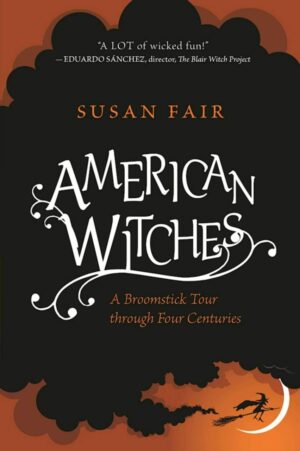
“American Witches: A Broomstick Tour through Four Centuries” by Susan Fair

"The history of American witches is way weirder than you ever imagined. From bewitched pigs hell-bent on revenge to gruesome twentieth-century murders, American Witches reveals strange incidents of witchcraft that have long been swept under the rug as bizarre sidenotes to history. On a tour through history that’s both whimsical and startling, we’ll encounter seventeenth-century children flying around inside their New England home “like geese.” We’ll meet a father-son team of pious Puritans who embarked on a mission that involved undressing ladies and overseeing hangings. And on the eve of the Civil War, we’ll accompany a reporter as he dons a dress and goes searching for witches in New York City’s most dangerous neighborhoods. Entertainingly ...>>

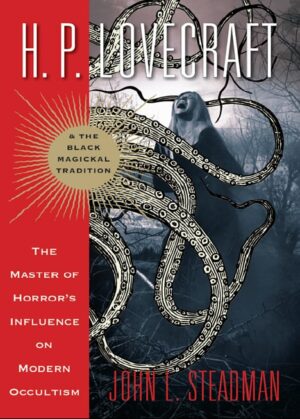
“H. P. Lovecraft and the Black Magickal Tradition: The Master of Horror’s Influence on Modern Occultism” by John L. Steadman

"Modern practicing occultists have argued that renowned horror writer H. P. Lovecraft was in possession of in-depth knowledge of black magick. Literary scholars claim that he was a master of his genre and craft, and his findings are purely psychological, nothing more. Was Lovecraft a practitioner of the dark arts himself? Was he privileged to knowledge that cannot be otherwise explained? Weaving the life story of Lovecraft in and out of an analysis of various modern magickal systems, scholar John L. Steadman has found direct and concrete examples that demonstrate that Lovecraft's works and specifically his Cthulhu Mythos and his creation of the Necronomicon are a legitimate basis for a working magickal system. Whether you ...>>

“Without Copyrights: Piracy, Publishing, and the Public Domain” by Robert Spoo

"The names of James Joyce and Ezra Pound ring out in the annals of literary modernism, but few recognize the name of Samuel Roth. A brash, business-savvy entrepreneur, Roth made a name—and a profit—for himself as the founding editor and owner of magazines that published selections from foreign writings—especially the risque parts—without permission. When he reprinted segments of James Joyce's epochal novel Ulysses, the author took him to court. Without Copyrights tells the story of how the clashes between authors, publishers, and literary "pirates" influenced both American copyright law and literature itself. From its inception in 1790, American copyright law offered no or less-than-perfect protection for works published abroad--to the fury of Charles Dickens, ...>>

“The Public Domain: Enclosing the Commons of the Mind” by James Boyle

" In this enlightening book James Boyle describes what he calls the range wars of the information age—today’s heated battles over intellectual property. Boyle argues that just as every informed citizen needs to know at least something about the environment or civil rights, every citizen should also understand intellectual property law. Why? Because intellectual property rights mark out the ground rules of the information society, and today’s policies are unbalanced, unsupported by evidence, and often detrimental to cultural access, free speech, digital creativity, and scientific innovation. Boyle identifies as a major problem the widespread failure to understand the importance of the public domain—the realm of material that everyone is free to use and share without ...>>

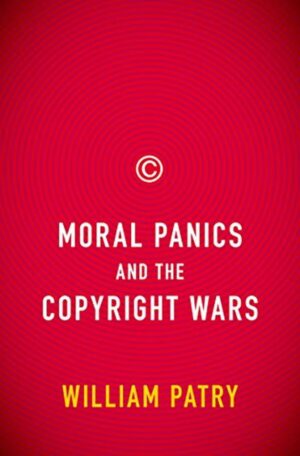
“Moral Panics and the Copyright Wars” by William Patry

"Metaphors, moral panics, folk devils, Jack Valenti, Joseph Schumpeter, John Maynard Keynes, predictable irrationality, and free market fundamentalism are a few of the topics covered in this lively, unflinching examination of the Copyright Wars: the pitched battles over new technology, business models, and most of all, consumers. In Moral Panics and the Copyright Wars, William Patry lays bare how we got to where we are: a bloated, punitive legal regime that has strayed far from its modest, but important roots. Patry demonstrates how copyright is a utilitarian government program—not a property or moral right. As a government program, copyright must be regulated and held accountable to ensure it is serving its public purpose. Just ...>>