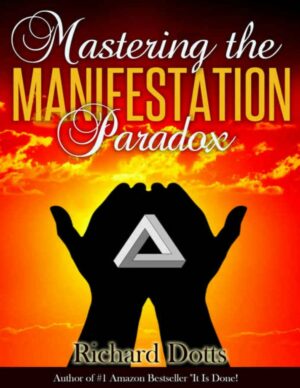
13.03.2023 “Mastering the Manifestation Paradox” by Richard Dotts Magick Matters "Why do certain desires manifest so quickly while others take such a long time?Why do most people have trouble manifesting the "big" stuff that matters to them — for example, large sums of money, relationships and physical objects such as cars and houses? Why do these manifestation techniques seem to work only for the small stuff in life but not for the "big" things? According to bestselling author and spiritual explorer Richard Dotts, the answer to these questions lie in the Manifestation Paradox. The Manifestation Paradox is an inner riddle that quickly becomes apparent to anyone who has been exposed to modern day Law of Attraction and manifestation teachings. It is an inner state that ...>> View
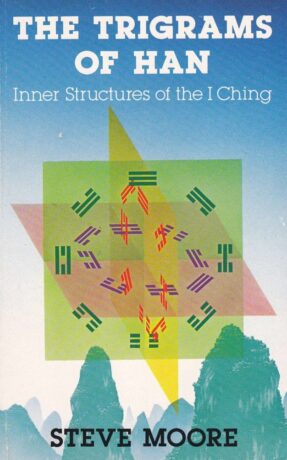
13.03.2023 “The Trigrams of Han: Inner Structures of the I Ching” by Steve Moore Magick Matters "Since the 1960s, interest in the Chinese I Ching, the Book of Changes, has risen to unprecedented levels in Europe and America. It has gained an enormous popular reputation as a work of divination, a reputation no doubt enhanced by the interest shown in it by the psychologist Carl Gustav Jung. As a result, translations, popularizations and works of interpretation have flooded onto the market in recent years. It may therefore seem superfluous to add yet another volume to an already expansive literature. However, this is not another work on divination and is intended for the reader whose interest in the I Ching extends beyond its predictive use. Its subject matter is at once ...>> View
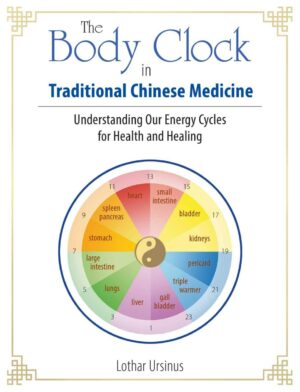
13.03.2023 “The Body Clock in Traditional Chinese Medicine: Understanding Our Energy Cycles for Health and Healing” by Lothar Ursinus Magick Matters "A reference guide to understanding the natural rhythm of our organs and learning to support them in a holistic way • Explains the Organ Body Clock from Traditional Chinese Medicine and which organs and meridians are dominant during different hours of the day • Describes exactly what happens inside the body during each organ’s active time and shows what we can do to support the organs with plant medicine, homeopathy, our behavior, and simple daily practices • Explores the mental and emotional states each organ is related to and their connections to the teeth, the other organs, and the Five Elements of TCM All of our organs are energetically interconnected. They each have regular rest ...>> View
12.03.2023 “Greco-Roman Money Magick: The Magick of Saturn, Janus, Ploutus, and Tyche” by David Thompson Magick Matters "A complete, easy to follow program to generate wealth using magick to gain the advantage in business or other enterprises. Along with multiple rituals to each one of these Greco-Roman dieties, there are Eight rituals which will guide you through the magick necessary to see success in most any endeavor. With easy-to-follow steps, clearly outlined and with easy to locate tools and props, this book will guide you to success."...>> View
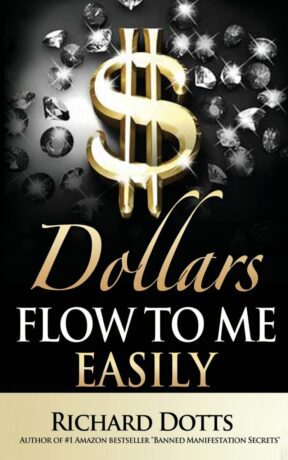
12.03.2023 “Dollars Flow to Me Easily” by Richard Dotts Magick Matters "Is it possible to read and relax your way into financial abundance? Can dollars flow to you even if you just sat quietly in your favorite armchair and did "nothing"? Is abundance and prosperity really our natural birthright, as claimed by so many spiritual masters and authors throughout the ages? In his groundbreaking book Dollars Flow To Me Easily, bestselling author and spiritual explorer Richard Dotts attempts something that he has never done before — to write a book that changes and transforms the reader’s innermost perceptions about money as they read it. Richard explains that these spiritual principles have never been about "attracting" more money or stuff into our lives. Instead, these Universal ...>> View