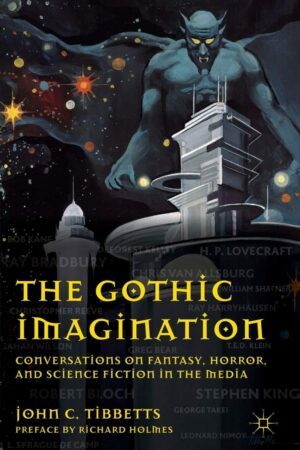
“Weird Realism: Lovecraft and Philosophy” by Graham Harman

"As Hölderlin was to Martin Heidegger and Mallarmé to Jacques Derrida, so is H.P. Lovecraft to the Speculative Realist philosophers. Lovecraft was one of the brightest stars of the horror and science fiction magazines, but died in poverty and relative obscurity in the 1930s. In 2005 he was finally elevated from pulp status to the classical literary canon with the release of a Library of America volume dedicated to his work. The impact of Lovecraft on philosophy has been building for more than a decade. Initially championed by shadowy guru Nick Land at Warwick during the 1990s, he was later discovered to be an object of private fascination for all four original members of...>>

“Myths of the Underworld in Contemporary Culture: The Backward Gaze” by Judith Fletcher

"Myths of the Underworld in Contemporary Culture: The Backward Gaze examines a series of twentieth and twenty-first century fictional works that adapt Greco-Roman myths of the catabasis, the heroic journey to the underworld. Covering a range of genres — including novels, comics, and children's culture, by authors such as Elena Ferrante, Salman Rushdie, Neil Gaiman, A. S. Byatt, Toni Morrison, and Anne Patchett — it reveals how an enduring fascination with life after death, and fantasies of accessing the world of the dead while we are still alive, manifest themselves in myriad and varied re-imaginings of the ancient descent myth. The volume begins with a detailed overview of the use of the myth by...>>
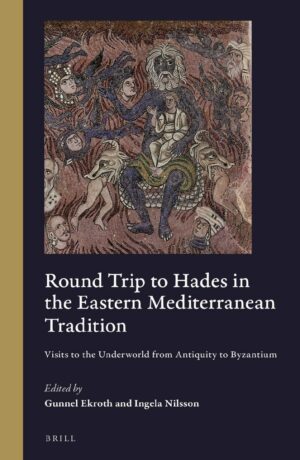
“Round Trip to Hades in the Eastern Mediterranean Tradition: Visits to the Underworld from Antiquity to Byzantium” by Gunnel Ekroth and Ingela Nilsson

"Round Trip to Hades in the Eastern Mediterranean Tradition explores how the theme of visiting the Underworld and returning alive has been treated, transmitted and transformed in the ancient Greek and Byzantine traditions. The journey was usually a descent (katabasis) into a dark and dull place, where forgetfulness and punishment reigned, but since ‘everyone’ was there, it was also a place that offered opportunities to meet people and socialize. Famous Classical round trips to Hades include those undertaken by Odysseus and Aeneas, but this pagan topic also caught the interest of Christian writers. The contributions of the present volume allow the reader to follow the passage from pagan to Christian representations of Hades—a passage that...>>

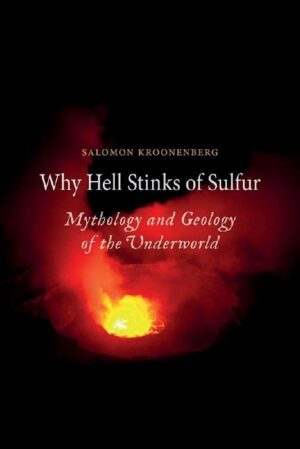
“Why Hell Stinks of Sulfur: Mythology and Geology of the Underworld” by Salomon Kroonenberg

"When people go looking for hell, they go underground. Dante, Aeneas, and Odysseus all journeyed beneath the earth to find the underworld, a place where the dead are tortured according to their sins. Buffy the Vampire Slayer had to deal with a huge underground pit infested with demons below her high school called the Hellmouth. And when Homer Simpson ate the forbidden donut for which he’d sold his soul to the devil, he was sucked through a fiery hole in the ground. Though humans actually haven’t gone more than 7.5 miles into the earth, we associate this mysterious underground realm with darkness and death, and the depths of the earth’s interior remain an inspiration...>>