Magick Matters

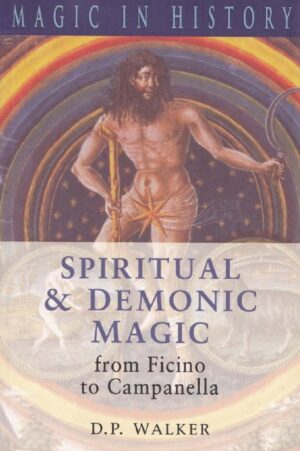
“Spiritual and Demonic Magic: From Ficino to Campanella” by D. P. Walker

"First published by the Warburg Institute in 1958, this book is considered a landmark in Renaissance studies. Whereas most scholars had tended to view magic as a marginal subject, Walker showed that magic was one of the most typical creations of the late fifteenth and sixteenth centuries. Walker takes readers through the magical concerns of some of the greatest thinkers of the Renaissance, from Marsilio Ficino, Giovanni Pico della Mirandola, and Jacques Lefevre d’Etaples to Jean Bodin, Francis Bacon, and Tommaso Campanella. Ultimately he demonstrates that magic was interconnected with religion, music, and medicine, all of which were central to the Renaissance notion of spiritus. Remarkable for its clarity of writing, this book is still considered...>>
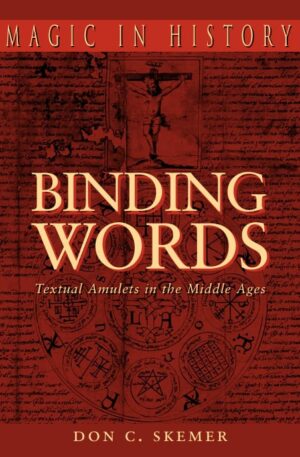
“Binding Words: Textual Amulets in the Middle Ages” by Don C. Skemer

"In the Middle Ages, textual amulets—short texts written on parchment or paper and worn on the body—were thought to protect the bearer against enemies, to heal afflictions caused by demonic invasions, and to bring the wearer good fortune. In Binding Words, Don C. Skemer provides the first book-length study of this once-common means of harnessing the magical power of words. Textual amulets were a unique source of empowerment, promising the believer safe passage through a precarious world by means of an ever-changing mix of scriptural quotations, divine names, common prayers, and liturgical formulas. Although theologians and canon lawyers frequently derided textual amulets as ignorant superstition, many literate clergy played a central role in producing and...>>

“Crafting the Witch: Gendering Magic in Medieval and Early Modern England” by Heidi Breuer

"This book analyzes the gendered transformation of magical figures occurring in Arthurian romance in England from the twelfth to the sixteenth centuries. In the earlier texts, magic is predominantly a masculine pursuit, garnering its user prestige and power, but in the later texts, magic becomes a primarily feminine activity, one that marks its user as wicked and heretical. This project explores both the literary and the social motivations for this transformation, seeking an answer to the question, 'why did the witch become wicked?' Heidi Breuer traverses both the medieval and early modern periods and considers the way in which the representation of literary witches interacted with the culture at large, ultimately arguing that a series of...>>