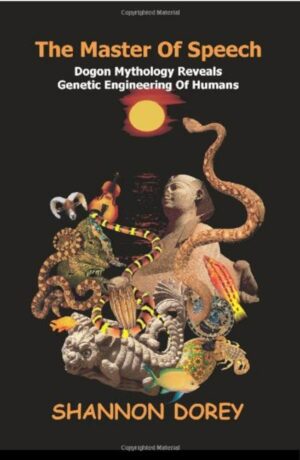
10.05.2022 “The Master of Speech” by Shannon Dorey Magick Matters "The Master of Speech deciphers the ancient mythology of the Dogon, an isolated African tribe who live along a 200-kilometre stretch of escarpment called the Cliffs of Bandiagara near Timbuktu. The French anthropologist Griaule recorded the Dogon mythology in 1947 in his book, Conversations with Ogotemmêli. The Dogon had knowledge of the triple star Sirius system that was told to Griaule long before modern astronomers discovered the third star in the system in 1995. The Dogon told Griaule they had obtained their knowledge from amphibious beings who came to Earth from the Sirius star system. After extensive analysis of this mythology, Dorey reveals that these alien beings called Nummo were responsible for human creation through...>> View
10.05.2022 “Wild Witchcraft: Folk Herbalism, Garden Magic, and Foraging for Spells, Rituals, and Remedies” by Rebecca Beyer Magick Matters 🕵️🐷🕵️ zero-day🕵️🐷🕵️ "Learn how to cultivate your own magical garden, begin your journey with folk herbalism, and awaken to your place in nature through practical skills from an experienced Appalachian forager and witch. Witchcraft is wild at heart, calling us into a relationship with the untamed world around us. Through the power of developing a relationship with plants, a witch—beginner or experienced—can practice their art more deeply and authentically by interacting with the beings that grow around us all. Bridging the gap between armchair witchcraft and the hedge witches of old, Wild Witchcraft empowers you to work directly with a wide variety of plants and trees safely and sustainably. With Wild Witchcraft, Rebecca Beyer draws from her...>> View
09.05.2022 “The Horned God of Wytches” by Zan Fraser Magick Matters "Horns and antlers have long been associated with power, divinity and mystically enlightened states. Zan Fraser traces the evidence of reverence for horned animals from the Paleolithic and Neolithic eras in Europe into the pagan period, Middle Ages and Renaissance. From cave paintings to Cernunnos and Herne, to Oberon, Puck, and Robin Goodfellow, Fraser explores the pervasive cultural images of horned ones and the theory that the demonized Horned God became the medieval Christian Devil. The Horned God of Wytches is the companion to Fraser's The Goddess of Wytches."...>> View
09.05.2022 “A Briefe Historie of Wytches: As Told Through Examples of Burning Times Drama” by Zan Fraser Magick Matters "By the end of the Middle Ages, the popular image of the witch had undergone a reversal. Whereas once she had been admittedly wild and unruly, she had become unremittingly ghoulish, vampiric, cannibalistic and malevolent. This change in perception, wise-woman to evil hag, played an important part in determining the fates of women in Europe. Since the image of the witch is tied so intimately to women, the denigration of this powerful archetype adversely affected the role of females in Middle Ages society. How did this evolution, the transformation, occur? Classically trained actor Zan Fraser shows how the image of witches changed in Elizabethan Era witch plays. Because drama causes the past to live...>> View
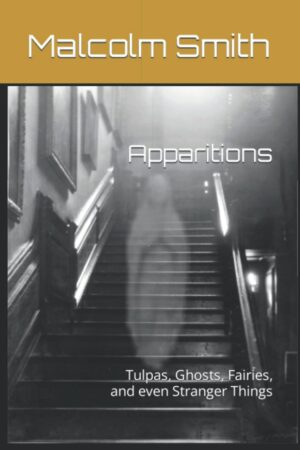
09.05.2022 “Apparitions: Tulpas, Ghosts, Fairies, and even Stranger Things” by Malcolm Smith Magick Matters "One in ten people claim to have encountered a ghost, yet science refuses to acknowledge their existence. However, it turns out that ghosts are by no means the only, or most mysterious of apparitions. Now, an author with a background in science has sought to uncover the parameters of this bewildering field. In this, he has adopted three principals: 1. to first seek a mundane explanation 2. not accept anything until it has been confirmed by further data, and 3. not to discard any item, but to file it away in case something similar appears later. In this manner, he documents the little known phenomenon of apparitions which can be shown to result from...>> View