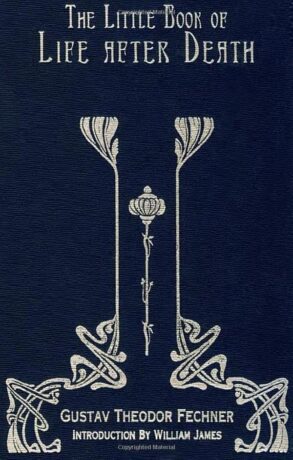
“The Little Book Of Life After Death” by Gustav Theodor Fechner (2005 Red Wheel/Weiser edition)

"A lost classic found, a guidebook for life's biggest adventure—death! Gustav Theodor Fechner was a 19thcentury physicist, psychologist, metaphysicist, and musician, who applied his considerable intellect to examining the question of life after death. Does it exist? If so, what form might it take? First written and published in a time when traditional understanding of God and nature were undergoing a huge transformation, Fechner's reasonable, accessible, and groundbreaking book became a manual for living well and dying as part of life. Fechner explains that death is another form of birth. That just as you cannot remember the time in the womb and the painful birthing process, so too will you not remember death when you have...>>
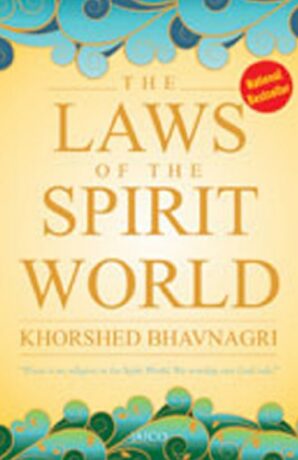
“The Laws of the Spirit World” by Khorshed Bhavnagri

"The Laws of the Spirit World by Khorshed Bhavnagri is a book that tells us about automatic writing, spirits and life after death. This book is based on the author’s own life. In 1980, Khorshed Bhavnagri and her husband lost their sons in a car accident. Their lives had come to a standstill after this tragedy until after a month of their death they started getting messages from their sons through mediators. This was something unimaginable. The author turned her personal misery into a spiritual story which is now admired by millions of people. The author claims about how the spirit of their sons contacted them and they successfully reunited. He also talks about...>>

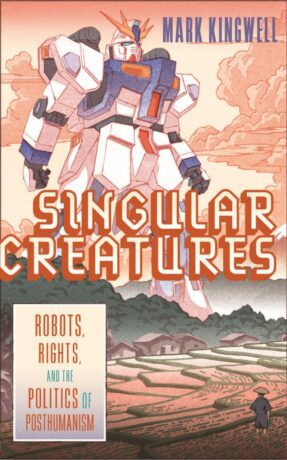
“Singular Creatures: Robots, Rights, and the Politics of Posthumanism” by Mark Kingwell

"Anxiety about non-human intelligent machines is a longstanding theme of cultural production and consumption. Examples range from tales of golems and Frankenstein's monster to the evil overlord scenarios of contemporary film and television franchises: Star Trek, the Alien series, and the Terminator sequence, as well as Her, Black Mirror, Blade Runner, Ex Machina, and many other less mainstream cultural artifacts. The source of this anxiety is clear. Non-human conscious entities may turn out to be superior to any biological form of life, allowing a stride across human ambition in a moment dubbed "the Singularity" by AI insiders. This is the turning point when non-human entities advance and reproduce in a manner that surpasses and subjugates...>>

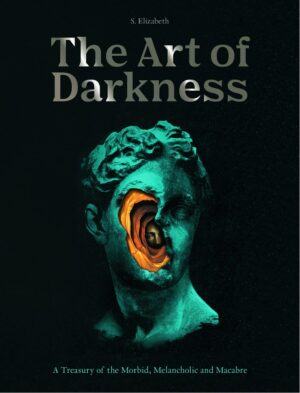
“The Art of Darkness: A Treasury of the Morbid, Melancholic and Macabre” by S. Elizabeth

"The Art of Darkness is a visually rich sourcebook featuring eclectic artworks that have been inspired and informed by the morbid, melancholic, and macabre. Throughout history, artists have been obsessed with darkness — creating works that haunt and horrify, mesmerise and delight, and play on our innermost fears. Gentileschi took revenge with paint in Judith Slaying Holofernes while Bosch depicted fearful visions of Hell that still beguile. Victorian Britain became strangely obsessed with the dead and in Norway Munch explored anxiety and fear in one of the most famous paintings in the world (The Scream, 1893). Today, the Chapman Brothers, Damien Hirst and Louise Bourgeois, as well as many lesser known artists working in the...>>