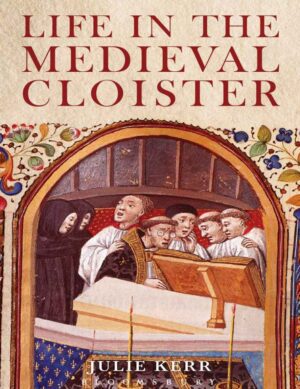
05.03.2023 “Life in the Medieval Cloister” by Julie Kerr Magick Matters "Life in the Medieval Cloister makes extensive use of primary sources and quotations from chronicles, letters, customaries and miracle stories, and the experience of medieval monastic life is presented through the monks' own words. Medievalist Julie Kerr provides day to day account of life in the medieval monastery from the Norman conquest to the Dissolution, with a particular focus on the high Middle ages, exploring such questions as: What effect did the ascetic lifestyle have on the monks' physical health and mental well-being? How difficult was it for newcomers to adapt to the rigors of the cloister? Did the monks suffer from anxiety and boredom; what caused them concern and how...>> View
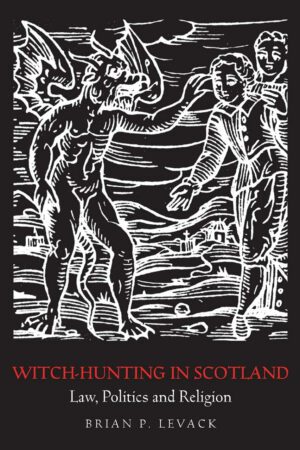
05.03.2023 “Witch-Hunting in Scotland: Law, Politics and Religion” by Brian P. Levack Magick Matters "Witch-Hunting in Scotland presents a fresh perspective on the trial and execution of the hundreds of women and men prosecuted for the crime of witchcraft, an offence that involved the alleged practice of maleficent magic and the worship of the devil, for inflicting harm on their neighbours and making pacts with the devil. Brian P. Levack draws on law, politics and religion to explain the intensity of Scottish witch-hunting. Topics discussed include: the distinctive features of the Scottish criminal justice system the use of torture to extract confessions the intersection of witch-hunting with local and national politics the relationship between state-building and witch-hunting...>> View
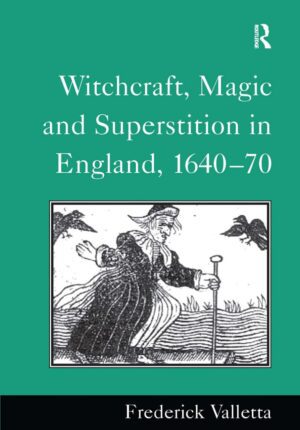
05.03.2023 “Witchcraft, Magic and Superstition in England, 1640–70” by Frederick Valletta Magick Matters "This study examines the relationship between élite and popular beliefs in witchcraft, magic and superstition in England, analyzing such beliefs against the background of political, religious and social upheaval characteristic of the Civil War, Interregnum and Restoration periods. Belief in witchcraft received new impulses because of the general ferment of religious ideas and the tendency of participants in the Civil Wars to resort to imagery drawn from beliefs about the devil and witches; or to use portents to argue for the wrongs of their opponents. Throughout the work, the author stresses that deeply held superstitions were fundamental to belief in witches, the devil, ghosts, apparitions and supernatural healing. Despite the fact that popular superstitions...>> View
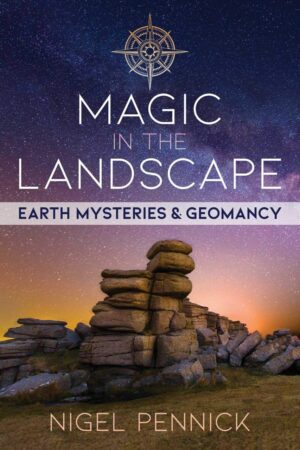
05.03.2023 “Magic in the Landscape: Earth Mysteries and Geomancy” by Nigel Pennick Magick Matters "Learn to cultivate a traditional, beneficial relationship with the land by embracing the forgotten practices of our ancestors • Details the ancient art of geomancy and Earth magic, including how to work with ley lines, astrology, and the four directions to honor a space and make it a place of power • Explores the magic of the land around us and how our ancestors interacted with Earth energies and the forces of Nature • Discusses the power of boundaries and magic circles, the proper "feng shui" of graveyards and cemeteries, and magically powerful places such as crossroads, fairgrounds, and the mystic triangles found in "no-man’s lands" Our ancestors were deeply aware of the magical power of their local...>> View
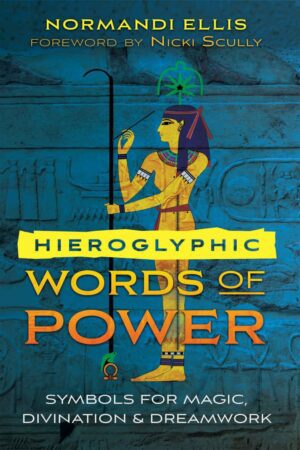
05.03.2023 “Hieroglyphic Words of Power: Symbols for Magic, Divination, and Dreamwork” by Normandi Ellis (alternate rip) Magick Matters "A guide to harnessing the ancient power of hieroglyphs • Reveals hieroglyphs as magical tools for manifesting ideas in the material world • Offers in-depth interpretations of 60 hieroglyphs and guidelines for understanding them as words of power, oracles, and dream symbols • Explains how to create your own hieroglyph cards and amulets and use them for divination, meditation, and manifestation work Words are magic. They operate on many levels through both sound and symbol. Egyptian priests understood that language and thought could create realities if the exact words are uttered at the right time, properly intoned, and filled with intention. They called their magical language of hieroglyphic symbols medju neter, meaning “the Word of God.” These symbols...>> View