“Healing Mantras: Using Sound Affirmations for Personal Power, Creativity, and Healing” by Thomas Ashley-Farrand

"Mantras, or simple chants, are short phrases packed with energy and intention--specifically designed to generate powerful sound waves that promote healing, insight, creativity, and spiritual growth. Healing Mantras is the practical, how-to guide that makes the strengths and benefits of mantras available to everyone. The transformative power of sound has been passed down to the present from the sages of India, the classical scientists of ancient Greece, and the medieval monks of Europe. Mantras, sounds, and chants have inspired, comforted, and mended the lives of individuals, religious orders, and even entire cultures. Even though the science and discipline of chanting and formal prayer are practiced in every religion around the world, this is the...>>
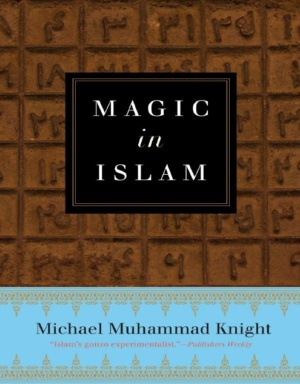
“Magic In Islam” by Michael Muhammad Knight

Magic in Islam offers a look at magical and occult technologies throughout Muslim history, starting with Islam's earliest and most canonical sources. In addition to providing a highly accessible introduction to magic as it is defined, practiced, condemned, and defended within Muslim traditions, Magic in Islam challenges common assumptions about organized religion. Michael Muhammad Knight's deeply original book fills a gap within existing literature on the place of magic in Islamic traditions and opens a new window on Islam for general readers and students of religion alike. In doing so, the book counters and complicates widespread perceptions of Islam, as well as of magic as it is practiced outside of European contexts. Magic in Islam...>>

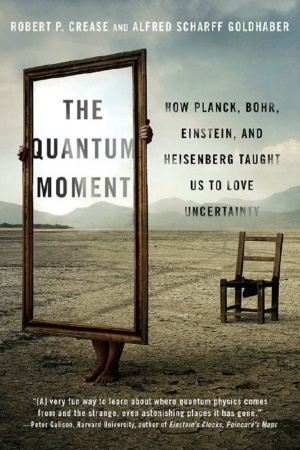
“The Quantum Moment: How Planck, Bohr, Einstein, and Heisenberg Taught Us to Love Uncertainty” by Robert P. Crease and Alfred Scharff Golhaber

"From multiverses and quantum leaps to Schrödinger’s cat and time travel, quantum mechanics has irreversibly shaped the popular imagination. Entertainers and writers from Lady Gaga to David Foster Wallace take advantage of its associations and nuances. In The Quantum Moment, philosopher Robert P. Crease and physicist Alfred Scharff Goldhaber recount the fascinating story of how the quantum jumped from physics into popular culture, with brief explorations of the underlying math and physics concepts and descriptions of the fiery disputes among figures including Einstein, Schrödinger, and Niels Bohr. Understanding and appreciating quantum imagery, its uses and abuses, is part of what it means to be an educated person in the twenty-first century. The Quantum Moment...>>

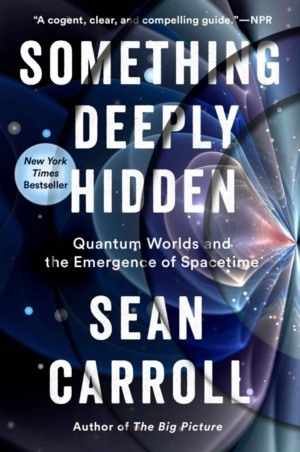
“Something Deeply Hidden: Quantum Worlds and the Emergence of Spacetime” by Sean Carroll

"As you read these words, copies of you are being created. Sean Carroll, theoretical physicist and one of this world’s most celebrated writers on science, rewrites the history of 20th century physics. Already hailed as a masterpiece, Something Deeply Hidden shows for the first time that facing up to the essential puzzle of quantum mechanics utterly transforms how we think about space and time. His reconciling of quantum mechanics with Einstein’s theory of relativity changes, well, everything. Most physicists haven’t even recognized the uncomfortable truth: physics has been in crisis since 1927. Quantum mechanics has always had obvious gaps—which have come to be simply ignored. Science popularizers keep telling us how weird it...>>

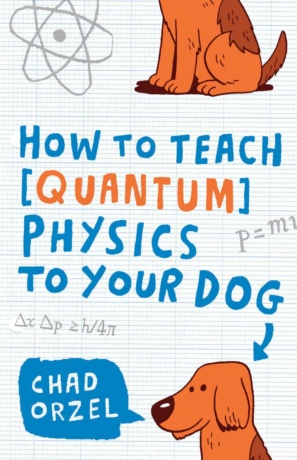
“How to Teach Quantum Physics to Your Dog” by Chad Orzel

"When physics professor Chad Orzel went to the pound to adopt a dog, he never imagined Emmy. She wasn’t just a friendly mutt who needed a home. Soon she was trying to use the strange ideas of quantum mechanics for the really important things in her life: chasing critters, getting treats, and going for walks. She peppered Chad with questions: Could she use quantum tunneling to get through the neighbor’s fence and chase bunnies? What about quantum teleportation to catch squirrels before they climb out of reach? Where are all the universes in which Chad drops steak on the floor? With great humor and clarity, Chad Orzel explains to Emmy, and to human readers, just...>>