24.10.2020 “I Ching: The Book of Change: A New Translation” translated by David Hinton Magick Matters "In a radically new translation and interpretation of the I Ching, David Hinton strips this ancient Chinese masterwork of the usual apparatus and discovers a deeply poetic and philosophical text. Teasing out an elegant vision of the cosmos as ever-changing yet harmonious, Hinton reveals the seed from which Chinese philosophy, poetry, and painting grew. Although it was and is widely used for divination, the I Ching is also a book of poetic philosophy, deeply valued by artists and intellectuals, and Hinton's translation restores it to its original lyrical form. Previous translations have rendered the I Ching as a divination text full of arcane language and extensive commentary. Though informative, these versions rarely hint at the...>> View
24.10.2020 “I Ching: The Book of Change” translated and edited by John Blofeld Magick Matters "The I Ching, probably the oldest book in existence, provides a system of knowledge that makes it possible to analyze the patterns of changes in life governed by the Immutable Law of Change. Whether we use the I Ching for divination or to study the principles involved with it, if we allow ourselves to be governed by its teachings, we shall enrich the content of our lives, free ourselves from anxiety, and become harmless or even intelligently helpful to others and pleasant companions to ourselves. This translation of the I Ching has been especially prepared for practical use in divination. It is easier to use than any previous version, and the language is closer to...>> View
24.10.2020 “The Complete I Ching — 10th Anniversary Edition: The Definitive Translation” by Taoist Master Alfred Huang Magick Matters "Translated by the eminent Taoist Master Alfred Huang, The Complete I Ching has been praised by scholars and new students of the I Ching since its first edition. A native Chinese speaker, Master Huang first translated the original ideograms of the I Ching into contemporary Chinese and then into English, bringing forth the intuitive meanings embodied in the images of the I Ching and imbuing his translation with an accuracy and authenticity not possible in other English translations. However, what makes his translation truly definitive is his return to prominence of the Ten Wings, the commentaries by Confucius that are essential to the I Ching’s insights. This 10th anniversary edition offers a thorough introduction to...>> View
24.10.2020 “The Illustrated Book of Changes: I Ching ” by Li Yan Magick Matters "The Book of Changes, or Yi Jing or better known to the West as I Ching, is the oldest philosophical text extant in China. Its origins are lost in the mists of time, but scholars believe that the basic compilation was done early in the Zhou Dynasty (c. 11th century - 221 B.C.). Based on a system of divination using eight basic trigrams (groups of solid and broken lines), permutations of 64 pairs of trigrams were worked out and over the ages pithy commentaries added. The Book of Changes purports to chart the movements and developments (hence "changes") of all the phenomena in the universe, It has been regarded by many as a complete...>> View
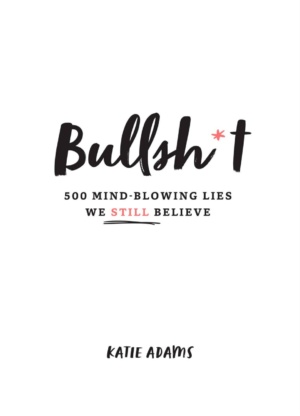
24.10.2020 “Bullsh*t: 500 Mind-Blowing Lies We Still Believe” by Katie Adams Magick Matters "American culture is awash in lies. Despite the fact that we have the truth at our fingertips at all times, Americans still believe lies about everything from health to politics to science to business. Kate Adams's clever trivia book debunks the 500 most common untruths and shows readers why we are all so susceptible to misinformation, and also includes a chapter on facts that are true, but seem like bullsh*t. Sample Lies: Left and Right Brain There’s no solid division between hemispheres; the left brain can learn “right-brain skills” and vice versa. Three Wise Men Nowhere in the Bible does it specify that there were three. Flush Rotation A flushed toilet doesn’t drain the other way in the opposite hemisphere. The...>> View