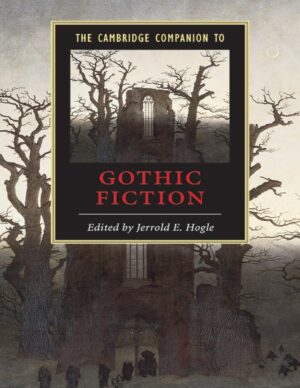
“The Cambridge Companion to Gothic Fiction” edited by Jerrold E. Hogle

"Gothic as a form of fiction-making has played a major role in Western culture since the late eighteenth century. In this volume, fourteen world-class experts on the Gothic provide thorough and revealing accounts of this haunting-to-horrifying type of fiction from the 1760s (the decade of The Castle of Otranto, the first so-called 'Gothic story') to the end of the twentieth century (an era haunted by filmed and computerized Gothic simulations). Along the way, these essays explore the connections of Gothic fictions to political and industrial revolutions, the realistic novel, the theatre, Romantic and post-Romantic poetry, nationalism and racism from Europe to America, colonized and post-colonial populations, the rise of film and other visual technologies,...>>

“Gothic Machine: Textualities, Pre-cinematic Media and Film in Popular Visual Culture 1670-1910” edited by David J. Jones

"Gothic Machine is a ground-breaking exploration of relations between Gothic literature, pre-cinematic media such as magic lanterns, phantasmagoria and dioramas and the first films 1670-1910. Starting with the earliest projections of horror images, continuing through the development of Gothic fiction and drama and closing with the first Frankenstein film, this study is a fascinating and pioneering evaluation of relations between these different media. As early as 1800, the Marquis de Sade identified Gothic novels such as The Monk and The Mysteries of Udolpho as ‘phantasmagoria’. This work explores the reasons why and, amongst the other mysteries broached en route is the reason that our first view of Dracula on English soil is described by...>>

“Demons of the Body and Mind: Essays on Disability in Gothic Literature” edited by Ruth Bienstock Anolik

"The Gothic mode, typically preoccupied by questions of difference and otherness, consistently imagines the Other as a source of grotesque horror. The sixteen critical essays in this collection examine the ways in which those suffering from mental and physical ailments are refigured as Other, and how they are imagined to be monstrous. Together, the essays highlight the Gothic inclination to represent all ailments as visibly monstrous, even those, such as mental illness, which were invisible. Paradoxically, the Other also becomes a pitiful figure, often evoking empathy. This exploration of illness and disability represents a strong addition to Gothic studies."...>>

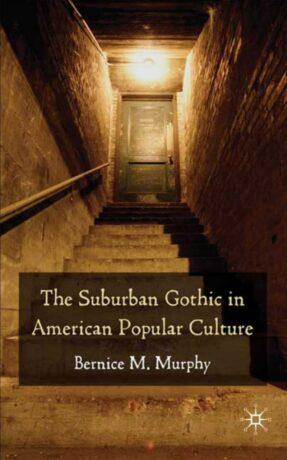
“The Suburban Gothic in American Popular Culture” by Bernice M. Murphy

"From the beginning of the post-war era, suburbia has frequently served as a setting for narratives of fear, repression and horror. Why has this been the case? And what actually is the Suburban Gothic? Beginning with a discussion of Shirley Jackson's novel The Road Through the Wall (1948) and ending with Desperate Housewives (2004- ), this book discusses representative texts from each decade up to the present day. Each chapter provides a contextualising examination of the era and the cultural and historical contexts of its setting, thus providing a unique insight into the changing face of the suburbs and, by extension, of American society."...>>

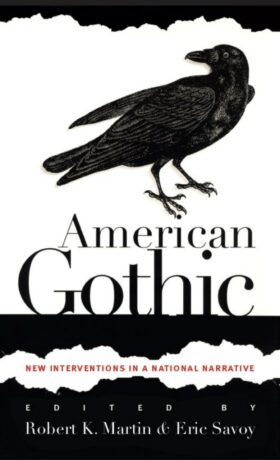
“American Gothic: New Interventions in a National Narrative” edited by Robert K. Martin and Eric Savoy

"In America as in Britain, the rise of the Gothic represented the other—the fearful shadows cast upon Enlightenment philosophies of common sense, democratic positivism, and optimistic futurity. Many critics have recognized the centrality of these shadows to American culture and self-identification. American Gothic, however, remaps the field by offering a series of revisionist essays associated with a common theme: the range and variety of Gothic manifestations in high and popular art from the roots of American culture to the present. The thirteen essayists approach the persistence of the Gothic in American culture by providing a composite of interventions that focus on specific issues—the histories of gender and race, the cultures of cities and scandals and...>>