Magick Matters

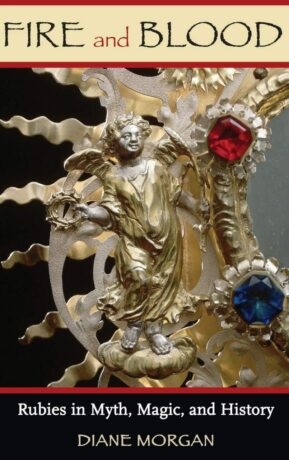
“Fire and Blood: Rubies in Myth, Magic, and History”

"The ruby is the world's most precious and rare stone. For the ancient Hindus, the ruby was Rajnapura: the Gem of Gems, at whose heart surges an eternal, unquenchable flame. Yet, for all its rarity and beauty, the ruby has always been a slightly sinister stone. Indian legend says the ruby was born from the blood of a demon. Indeed, the ruby is very close to a wild, living being: fiery, passionate, and dangerous. It has been at the center of love and wars, a symbol of passion, greed, and strong magic. Ancient sages and modern crystal healers have credited it with strange powers―from the granting of prophetic insight to protecting one from bullets. It ...>>

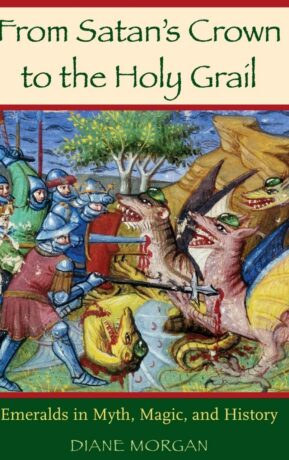
“From Satan’s Crown to the Holy Grail: Emeralds in Myth, Magic, and History” by Diane Morgan

"Morgan discusses the origin of the emerald, its peculiar structure, and its strange allure. The story weaves across several continents and thousands of years. It is a tale of conquistadors, treachery, shipwrecks, and alchemy. Along the way, we meet scientists and kings and bear witness as the great emeralds are born, mined, smuggled, cut, and sold. The book also discusses the modern art of making synthetic emeralds. From the fastnesses of Afghanistan to the steamy jungles of Colombia and Zimbabwe, from the sands of Egypt to the bitter Urals, this is the story of a stone whose strange journey reflects the yearnings, greed, passions, and longing for beauty of the human race."...>>
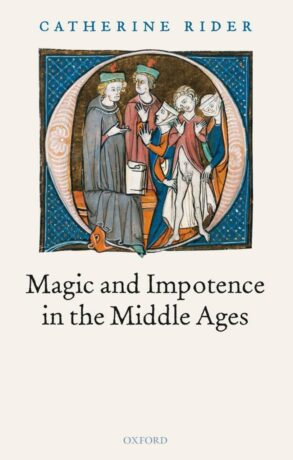
“Magic and Impotence in the Middle Ages” by Catherine Rider

"Magic and Impotence in the Middle Ages investigates the common medieval belief that magic could cause impotence, focusing particularly on the period 1150-1450. The subject has never been studied in detail before, but there is a surprisingly large amount of information about it in four kinds of source: confessors' manuals; medical compendia that discussed many illnesses; commentaries on canon law; and theological commentaries on the Sentences of Peter Lombard. Although most historians of medieval culture focus on only one or two of these kinds of source, a broader comparison reveals that medieval writers held surprisingly diverse opinions about what magic was, how it worked, and whether it was ever legitimate to use it. Medieval ...>>

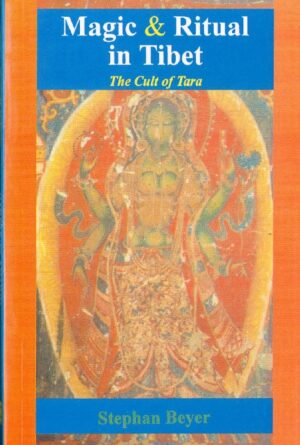
“Magic and Ritual in Tibet: The Cult of Tara” by Stephan Beyer

"The real history of man is the history of religion. The truth of the famous dictum of Max Muller, the father of the History of Religions, is nowhere so obvious as in Tibet. Western students have observed that religion and magic pervade not only the forms of Tibetan art, politics, and society, but also every detail of ordinary human existence. And what is the all-pervading religion of Tibet? The Buddhism of that country has been described to us, of course, but that does not mean the question has been answered. The unique importance of Stephan Beyerís work is that it presents the vital material ignored or slighted by others: the living ritual of Tibetan Buddhists. ...>>

“Magic: The Basics” by Michael D. Bailey

"Magic: The Basics is a concise and engaging introduction to magic in world history and contemporary societies. Presenting magic as a global phenomenon which has manifested in all human cultures, this book takes a thematic approach which explores the historical, social, and cultural aspects of magic. Key features include: * attempts to define magic either in universal or more particular terms, and to contrast it with other broad and potentially fluid categories such as religion and science; * an examination of different forms of magical practice and the purposes for which magic has been used; * debates about magic’s effectiveness, its reality, and its morality; * an exploration of magic’s association with certain social ...>>