Skip to content
Magick Matters
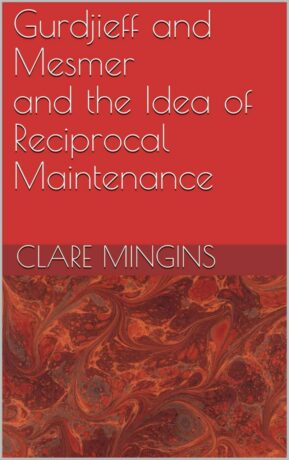
"GURDJIEFF’S WRITING IS PERMEATED through and through with certain questions that also occupied Mesmer, maybe most notably, the question of influences, which perhaps reaches its highest expression, in Gurdjieff’s astonishing and powerful idea of reciprocal maintenance. This is an idea which runs through Gurdjieff's "All and Everything" as a constant theme in various forms. Mesmer, too, in his writings, was unceasingly occupied with the idea of reciprocal exchange between “bodies” - from celestial bodies, to human beings, to animals and plants - in the form of incoming and outgoing currents, as he saw it. The idea of influences and reciprocal maintenance is explored here especially using the subject of attention and the connection with...>>
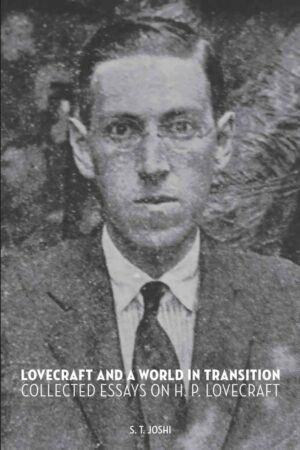
"For the past thirty-five years, S. T. Joshi has been one of the leading authorities on H. P. Lovecraft. As Lovecraft’s editor and biographer, Joshi has revolutionized our understanding of the dreamer from Providence. This enormous volume, which contains all the critical essays that Joshi has written since 1979, is a treasure-house of scholarship that exhibits Joshi’s all-encompassing knowledge of Lovecraft the man, writer, and thinker.
Joshi has focused on a holistic understanding of Lovecraft, integrating his life and thought into the study of his work. Lovecraft, the atheist and materialist, infused his worldview into each tale, essay, and poem. Joshi has studied the interrelations between Lovecraft’s life and work in such papers as “Autobiography...>>