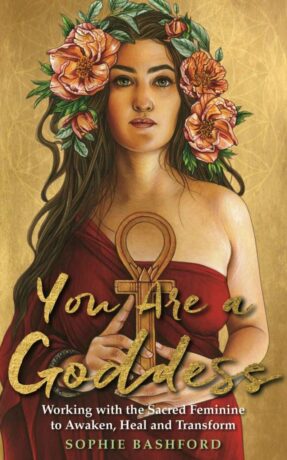
21.03.2021 “You Are a Goddess: Working with the Sacred Feminine to Awaken, Heal and Transform” by Sophie Bashford Magick Matters "You know 'the Goddess' as a divine feminine figure of myth, art and faith - but are you aware that, in truth, the Goddess is a life force that lives in you? Did you know that your multi-faceted experiences of life as a woman are influenced by Goddess consciousness? Do you sense that you have a hidden feminine energy that longs to be seen, accepted, valued - and used for a healing purpose? In this highly engaging and stirring book, leading intuitive Sophie Bashford takes you on a journey to meet nine Goddess archetypes, which will help you to: • understand the many ups and downs, emotions and cycles of your life through...>> View
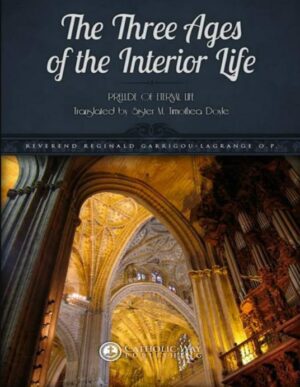
21.03.2021 “The Three Ages of the Interior Life” by Rev. Reginald Garrigou-Lagrange Magick Matters "Explains the entire Catholic tradition on the spiritual life. Covers virtually all aspects of our Faith. The masterpiece of possibly the 20th century's greatest theologian. Covers scores of topics, including contemplative prayer, one's predominant fault, the healing of pride, spiritual direction, etc. Clear, complete, orthodox, inspiring! A masterpiece in every sense of the word. "...>> View
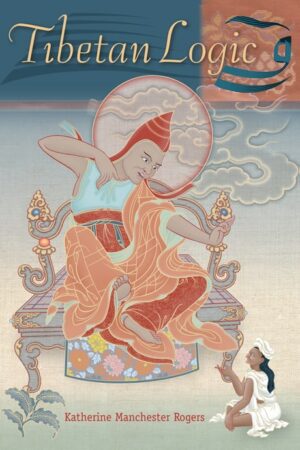
21.03.2021 “Tibetan Logic” by Katherine Manchester Rogers Magick Matters "Within Tibetan Buddhism has arisen a system of education and a curriculum designed to enable the student to develop a path of reasoning—a consciousness trained in reasoned analysis until capable of understanding first the meaning of religious texts and eventually the true nature of reality. An important aspect of Tibetan logic is that it is used to develop new and valid knowledge about oneself and the world. Included here is a translation of a text by Pur-bu-jok, the Thirteenth Dalai Lama's philosophy tutor on the topic of Signs and Reasonings—a manual introducing beginners to the principles, vocabulary, and concepts of the system of logic. The purpose of Pur-bu-jok's text is to lay a foundation...>> View
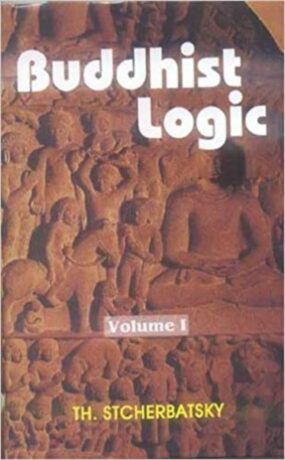
21.03.2021 “Buddhist Logic (2 volumes)” by F.Th. Stcherbatsky Magick Matters "Buddhist logic reveals itself as the culminating point of a long course of Indian philosophic history. Its birth, its growth and its decline run parallel with the birth, the growth and the decline of Indian civilisation. The time has come to reconsider the subject of Buddhist logic in its historical connections. This is done in these two volumes. In the copious notes the literary renderings are given where needed. This will enable the reader to fully appreciate the sometimes enormous distance which lies between the words of the Sanskrit phrasing and their philosophic meaning rendered according to our habits of thought. The notes also contain a philosophic comment of the translated texts. The first...>> View
21.03.2021 “Understanding Space-Time: The Philosophical Development of Physics from Newton to Einstein” by Robert DiSaille Magick Matters "Presenting the history of space-time physics, from Newton to Einstein, as a philosophical development DiSalle reflects our increasing understanding of the connections between ideas of space and time and our physical knowledge. He suggests that philosophy's greatest impact on physics has come about, less by the influence of philosophical hypotheses, than by the philosophical analysis of concepts of space, time and motion, and the roles they play in our assumptions about physical objects and physical measurements. This way of thinking leads to interpretations of the work of Newton and Einstein and the connections between them. It also offers ways of looking at old questions about a priori knowledge, the physical interpretation of mathematics, and...>> View