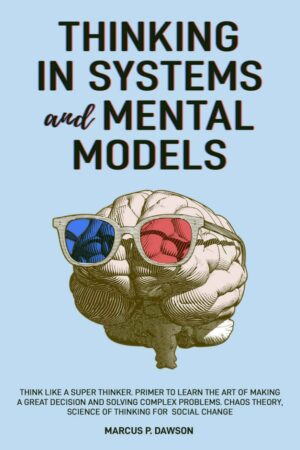
28.03.2021 “Thinking in Systems and Mental Models” by Marucs P. Dawson Magick Matters "Just as every node on a network contributes to the final result, every action of a member of a particular organizational system contributes to the outcome. Without a broad view of interconnectedness, our problem-solving skills are limited and short-sighted, and our abilities to make long-term, beneficial decisions are hampered. If we only look to the immediate and the superficial, we forget that we rely on the smallest of parts. If we don’t acknowledge our interdependence's complexity, then we are doomed to replicate a system that will ultimately fail. Awareness of our interconnectedness is key to solving the biggest and most complex problems we face in contemporary society. The real question is not whether...>> View
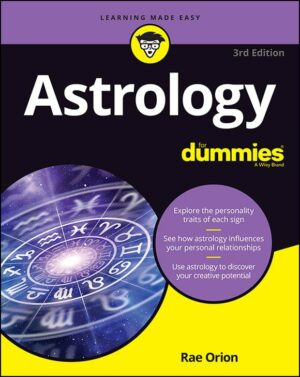
28.03.2021 “Astrology For Dummies” by Rae Orion (3rd edition) Magick Matters "For over four thousand years, people have watched the skies, correlating the movements of the Sun, the Moon, and the planets with human affairs. Astrology for Dummies shows the reader how to use that accumulated wisdom to identify strengths and weaknesses, discover creative abilities, understand relationships, and make the most of the times in which we live. Using an abundance of real-life examples, author Rae Orion offers an incisive account of each sign and planet, taking the reader far beyond the daily horoscope and illuminating the birth chart in all its individuality and complexity. Astrology for Dummies examines the time-honored ways astrology helps us understand ourselves and others. From how to map and interpret individual...>> View
28.03.2021 “Wicca Natural Magic Kit: The Sun, The Moon, and The Elements: Elemental Magic, Moon Magic, and Wheel of the Year Magic” by Lisa Chamberlain Magick Matters "Are you ready to take your magical experience to the next level? Wicca Natural Magic Kit from best-selling author Lisa Chamberlain will help you further develop your practice of magic within the framework of Wicca, Witchcraft, and other Pagan traditions. Expanding on core concepts found in Lisa’s first book, Wicca for Beginners, the Natural Magic Kit is intended for new and more experienced Witches alike, inviting you to dive into a deeper understanding of three central aspects of spiritual and magical practice: the Elements, the Moon, and the Wheel of the Year. The “Old Religion” is all about revering Nature and tapping its infinite energies. Each book in the Natural Magic Kit contains spells, rituals,...>> View
28.03.2021 “The Sources of the Faust Tradition from Simon Magus to Lessing” by Philip Mason Palmer and Robert Pattison More Magick Matters "In an experience of many years in conducting a course in Goethe’s Faust, trying to present to students of varied types and training the background out of which the drama grew, the compilers of this text have constantly felt the need of a collection of source material which would make that background more real and consequently more interesting. Whether a student is studying the background of Goethe’s Faust, or any other subject, it is desirable, both from the point of view of holding his interest and of developing his power of judgment, that he get as much direct contact as possible with the original materials that make up his field of study. But the...>> View
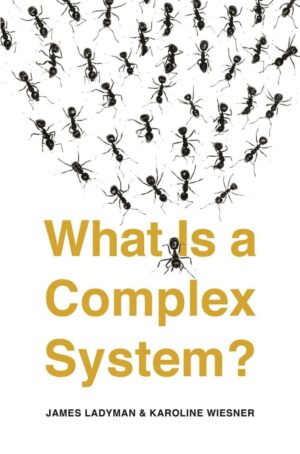
28.03.2021 “What Is a Complex System?” by James Ladyman and Karoline Wiesner Magick Matters "What is a complex system? Although “complexity science” is used to understand phenomena as diverse as the behavior of honeybees, the economic markets, the human brain, and the climate, there is no agreement about its foundations. In this introduction for students, academics, and general readers, philosopher of science James Ladyman and physicist Karoline Wiesner develop an account of complexity that brings the different concepts and mathematical measures applied to complex systems into a single framework. They introduce the different features of complex systems, discuss different conceptions of complexity, and develop their own account. They explain why complexity science is so important in today’s world."...>> View