“Lost Soul, Wise Soul: How Challenging Past Lives Shape Our Future” by Karen Joy

"Explore Challenging Past Lives and How They Can Change Your Future Drawing on her most compelling client cases, Karen Joy shows you the natural arc of a soul's journey over many lifetimes, including violent or negative ones. She reveals how our souls begin, how we enter lives on earth, and how facing a diverse range of experiences teaches us to be wiser and happier. Over many lifetimes, most souls have played the dual roles of victim and perpetrator. The trauma of these past lives―especially those that harmed others―can burden your soul, causing your present self to struggle with negative experiences. Learn how challenges can lead you astray, how energy can be carried from one incarnation to...>>

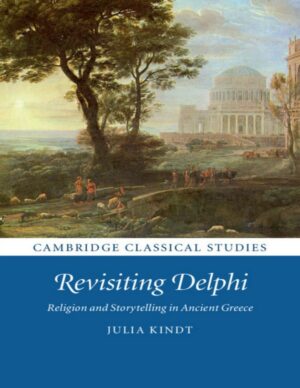
“Revisiting Delphi: Religion and Storytelling in Ancient Greece” by Julia Kindt

"Revisiting Delphi speaks to all admirers of Delphi and its famous prophecies, be they experts on ancient Greek religion, students of the ancient world, or just lovers of a good story. It invites readers to revisit the famous Oracle of Apollo at Delphi, along with Herodotus, Euripides, Socrates, Pausanias and Athenaeus, offering the first comparative and extended enquiry into the way these and other authors force us to move the link between religion and narrative centre stage. Their accounts of Delphi and its prophecies reflect a world in which the gods frequently remain baffling and elusive despite every human effort to make sense of the signs they give."...>>

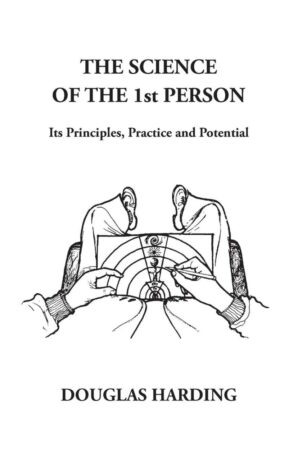
“The Science of the 1st Person: Its Principles, Practice and Potential” by Douglas Edison Harding

"This book is about the heart of religious experience, namely Enlightenment (which is finding the truth concerning oneself), and about science (which is finding the truth concerning other things), and about the relationship between them. It claims that Enlightenment is more truly scientific than science itself; and that, without Enlightenment, science is only half the story and therefore full of contradictions, of insoluble problems both theoretical and practical. It shows how, when at last one turns one’s attention round and ceases to overlook the Looker—the 1st Person at the near end of one’s microscope or telescope or spectacles—these contradictions are resolved. Some 37 examples are given, taken from such diverse fields as physics, mathematics, semantics,...>>
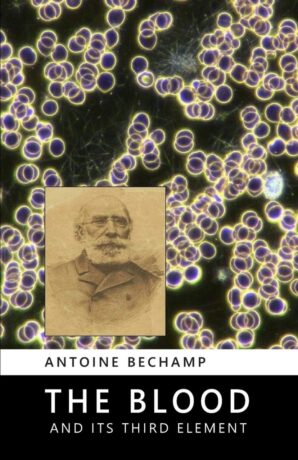
“The Blood and its Third Element” by Pierre Jacques Antoine Bechamp

"What Dr. BĂ©champ is describing is a foundational concept. According to his experiments and observations, these tiny particles he named 'microzymas' have an active role in sustaining and also in terminating life. Using the syllable '-zyme' (now also used in the word 'enzyme') to indicate this principle of causing ‘fermentation’ (activity) BĂ©champ searched for and found the same particles and activity even in limestone, apparently from the ancient shelled creatures whose bodies were incorporated into the stone. They still retained their activity. The only factor that stopped these particles was heat. As Dr. BĂ©champ expressed it, “Life is the prey of life”: i.e. as the organizing life-principle of a complex body ceases to operate, the...>>

“The Einstein Factor: A Proven New Method for Increasing Your Intelligence” by Win Wenger and Richard Poe

"New research suggests that the superior achievements of famous thinkers may have been more the result of mental conditioning than genetic superiority. Now you can learn to condition your mind in the same way and improve your performance in virtually all aspects of mental ability, including memory, quickness, IQ, and learning capacity. Intelligence pioneer Dr. Win Wenger has identified the tools you need to reach greater levels of sharpness, insight, and overall intelligence. Using Wenger's Image Streaming technique, you learn to bypass inhibitions and access the hypernormal capabilities hidden in your own subconscious. Discover how you can: ·Improve your memory ·Read faster and learn more quickly ·Solve problems like a genius ·Score higher on tests ·Build self-esteem ·Induce a state of...>>