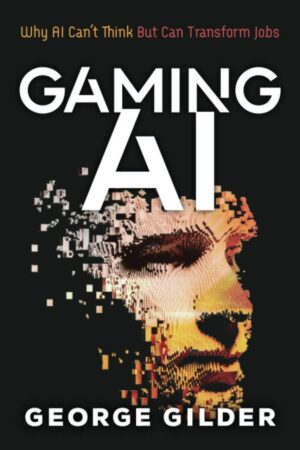
“Gaming AI: Why AI Can’t Think but Can Transform Jobs” by George Gilder

"Pointing to the triumph of artificial intelligence over unaided humans in everything from games such as chess and Go to vital tasks such as protein folding and securities trading, many experts uphold the theory of a “singularity.” This is the trigger point when human history ends and artificial intelligence prevails in an exponential cascade of self-replicating machines rocketing toward godlike supremacy in the universe. Gaming AI suggests that this belief is both dumb and self-defeating. Displaying a profound and crippling case of professional amnesia, the computer science establishment shows an ignorance of the most important findings of its own science, from Kurt Gödel’s “incompleteness” to Alan Turing’s “oracle” to Claude Shannon’s “entropy.” Dabbling in...>>

“Find Your Happy Daily Mantras: 365 Days of Motivation for a Happy, Peaceful, and Fulfilling Life” by Shannon Kaiser

"365 mantras and self-love lessons to help you live each day to the fullest. Never miss a day of inspiration with 365 mantras from bestselling author Shannon Kaiser, the luminous founder of PlayWithTheWorld.com. Start each day off with a new motto from Find Your Happy Daily Mantras and get the right guidance you need to live life with flair and enthusiasm. Each mantra includes a set of insights, affirmations, and a guiding question to direct your meditation. Whether it’s greeting the day head-on with “I am brave and courageous with my heart” or celebrating self-love with “I appreciate who I see in the mirror,” Shannon’s daily self-accepting and life-affirming mantras will open your...>>
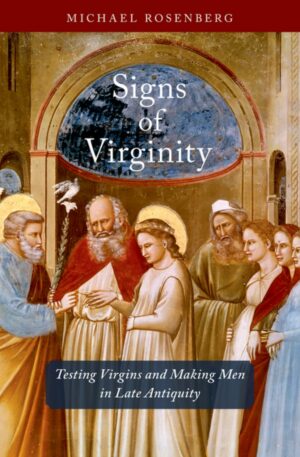
“Signs of Virginity: Testing Virgins and Making Men in Late Antiquity” by Michael Rosenberg

"Although the theme of bloodied nuptial sheets seems pervasive in Western culture, its association with female virginity is uniquely tied to a brief passage in the book of Deuteronomy detailing the procedure for verifying a young woman's purity; it seldom, if ever, appears outside of Abrahamic traditions. In Signs of Virginity, Michael Rosenberg examines the history of virginity testing in Judaism and early Christianity, and the relationship of these tests to a culture that encourages male sexual violence. Deuteronomy's violent vision of virginity has held sway in Jewish and Christian circles more or less ever since. However, Rosenberg points to two authors—the rabbinic collective that produced the Babylonian Talmud and the early Christian thinker Augustine...>>

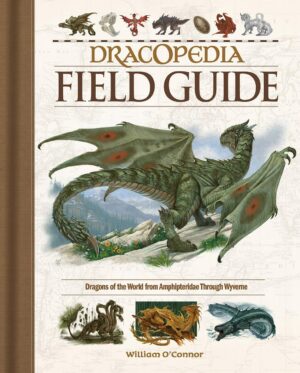
“Dracopedia Field Guide: Dragons of the World from Amphipteridae through Wyvernae” by William O’Connor

"Identify dragons in the wild with the Dracopedia Field Guide! Have you ever stumbled upon a dragon egg and thought to yourself, "I wonder which type of scaly beast will burst forth from this delicate and dappled shell?" Well, wonder no more. This fantasy field guide is required reading—and required packing—for both budding and expert dragon enthusiasts. Don’t leave home without it. This comprehensive and elucidating manual identifies the dragons of the world from Amphipteridae through Wyvernae. Each genus of dragon is meticulously chronicled—from winged Coatyls and Sea Orcs to itty, bitty Feydragons to fire-breathing Great Dragons—then broken down into additional subsets to help you discover what sets these magnificent creatures apart. Uncover the biology,...>>

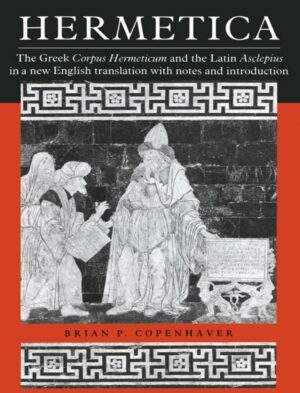
“Hermetica: The Greek Corpus Hermeticum and the Latin Asclepius in a New English Translation, with Notes and Introduction” by Brian P. Copenhaver

"The Hermetica are a body of theological-philosophical texts written in late antiquity, but long believed to be much older. Their supposed author, Hermes Trismegistus, was thought to be a contemporary of Moses, and the Hermetic philosophy was regarded as an ancient theology, parallel to the received wisdom of the Bible. This first English translation based on reliable texts, together with Brian P. Copenhaver's comprehensive introduction, provide an indispensable resource to scholars in ancient philosophy and religion, early Christianity, Renaissance literature, and history, the history of science, and the occultist tradition in which the Hermetica have become canonical texts."...>>