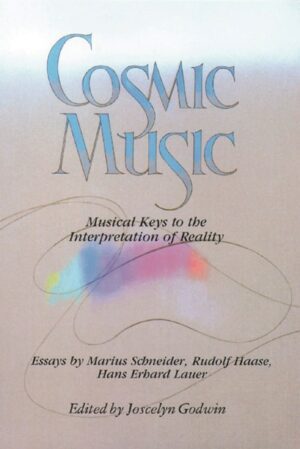
10.07.2022 “Cosmic Music: Musical Keys to the Interpretation of Reality” edited by Joscelyn Godwin Magick Matters "The idea that the universe is created out of sound or music (and therefore is music) is a very ancient one. In this book, Joscelyn Godwin brings together three contemporary German thinkers who exemplify this tradition in its modern variants: Marius Schneider, Rudolf Haase, and Hans Erhard Lauer. The selections draw on ancient Indian sources and mythology; Kepler's Platonic vision of a musical, geometric universe; and the evolution of the tone systems of music. While every music lover senses the power and truth that reside in music, very few actually approach music as a path to cosmic knowledge. Godwin takes literally Beethoven's assertion that "Music is a higher revelation than all wisdom or philosophy." Godwin...>> View
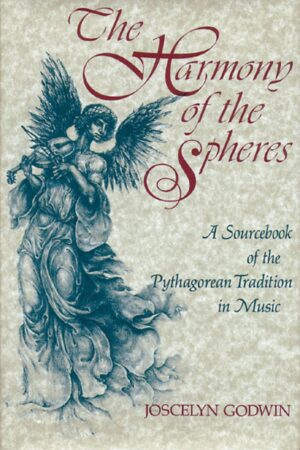
10.07.2022 “The Harmony of the Spheres: A Sourcebook of the Pythagorean Tradition in Music” by Joscelyn Godwin Magick Matters "Professor of Music at Colgate University and a widely respected musicologist, Godwin traces the history of the idea, held since ancient times, that the whole cosmos, with its circling planets and stars, is in some way a musical or harmonious entity. The author shows how this concept has continued to inspire philosophers, astronomers, and mystics from antiquity to the present day."...>> View
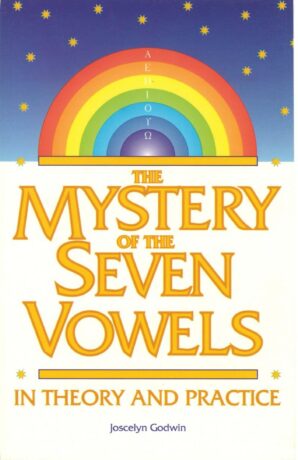
10.07.2022 “The Mystery of the Seven Vowels: In Theory and Practice” by Joscelyn Godwin Magick Matters "The seven vowels, which we use every day in speech, are truly mysterious things. Analysis shows that vowels depend on the phenomenon of harmonics, which is at the very basis of music, while our sensitivity to them proves that the human ear is naturally attuned to harmony. When we hear vowels, we are hearing the laws of harmony, which are ultimately the laws of number that are said the govern the universe. There is also an esoteric tradition that links the vowels to the seven plants of astrology and the gods that rule them. The mythological background includes such topics as the vowel-names of IAO, IAHWE, and other gods; the invocations of planets used...>> View
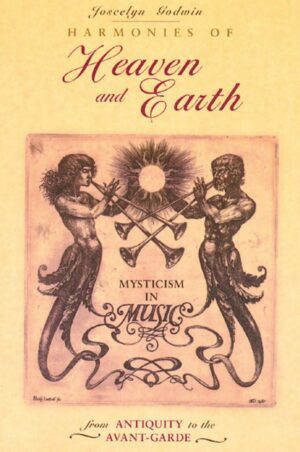
10.07.2022 “Harmonies of Heaven and Earth: Mysticism in Music from Antiquity to the Avant-Garde” by Joscelyn Godwin Magick Matters "All those who have ever reflected on music's inner reality have felt its universal and mystical aspects. Joscelyn Godwin turns to the metaphysical accounts of the higher worlds that are the birthplace of Harmony, following the path of musical inspiration on its descent to Earth, and illuminating the archetypal currents that lie beneath Western musical history."...>> View
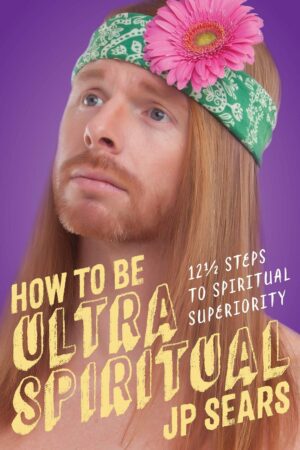
09.07.2022 “How to Be Ultra Spiritual: 12 1/2 Steps to Spiritual Superiority” by JP Sears Magick Matters "Welcome to the Glorious Grandeur of Ultra Spirituality In case you haven’t noticed, the New Age has become the Old Age. But don’t recycle your crystals just yet! His Enlightenedness JP Sears is ushering in the Newer Age, blinding us with the dawn-like brilliance that is Ultra Spirituality. How to Be Ultra Spiritual presents Ultra Spiritual JP’s none-of-a-kind guidance, so you can better yourself through teachings on: • Competitive spirituality―the Ultra Spiritual foundation that the rest of your Ultra Spiritual path rests on • Why burying your feelings alive makes you thrive • Dreaming up your awakening―how to engineer your carefully contrived spiritual narrative • Rigidly yogic yoga―the moisture-filled cloud formation that drops rain upon your river so your...>> View