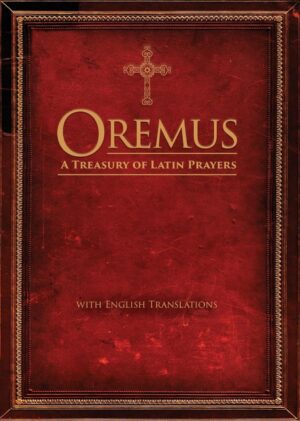
“Oremus: A Treasury of Latin Prayers with English Translations” by Ave Maria Press

"Oremus allows Catholics to experience anew—or for the first time—the beauty and rich spiritual heritage of the language used for almost two-thousand years in the scriptures, liturgy, and prayers of the Church. Traditional Latin prayers such as the Ave Maria, Sancte Michael, and Tantum Ergo are presented side-by-side with their literal English translations in this extraordinary collection. Pope Francis’s Twitter account in Latin has grown from 100,000 followers in 2013 to more than almost a million in 2020; and there is a growing interest by Catholics to learn traditional prayers in Latin. Oremus is a collection of cherished prayers in Latin—the exact words prayed by many of the saints over the centuries—including: The...>>

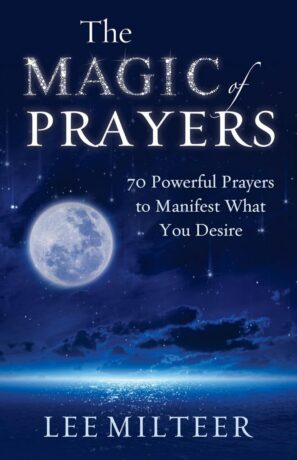
“The Magic of Prayers: 70 Powerful Prayers to Manifest What You Desire” by Lee Milteer

"There is always help available if you know how to ask. The Magic of Prayers is designed to carry with you so you have inspiration and assistance from the realm of spirit whenever you need it. The Infinite Intelligence is all-knowing, all-powerful, and omnipresent. When you pray, you invoke spiritual law and invite help from the God Source, which activates the ever-mysterious forces that create magical results in your life. The prayers in this book are designed to empower you with the words and energy that will connect you to your source so you can find solutions to whatever challenges you face. With prayers for prosperity, intuition, health, business success, and improving personal relationships,...>>

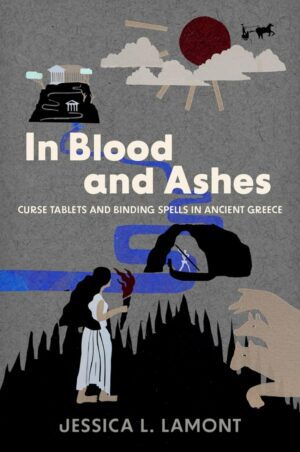
“In Blood and Ashes: Curse Tablets and Binding Spells in Ancient Greece” by Jessica L. Lamont

"From binding spells and incantations to curse-writing rituals, magic pervaded the ancient Greek world. In Blood and Ashes provides the first historical study of the development and dissemination of ritualized curse practice from 750-250 BCE, documenting the cultural pressures that drove the use of curse tablets, charms, spells, and other private rites. This book expands our understanding of daily life in ancient communities, showing how individuals were making sense of the world and coping with conflict, vulnerability, competition, anxiety, desire, and loss, all while conjuring the gods and powers of the Underworld. Bringing together epigraphic, literary, archaeological, and material evidence, Jessica L. Lamont reads between traditional histories of Archaic, Classical, and early Hellenistic Greece, drawing...>>

“Via Tortuosa: An Exposition on Crooked Path Sorcery” by Daniel Schulke

"Crooked Path Sorcery" is a term originating within the Cultus Sabbati, particularly within the ritual corpus of the Draconist, used to describe the antinomian and oppositional nature of its quintessence. This sorcerous ethos is extrapolated in such Cultus works as Qutub, The Dragon-Book of Essex, and Lux Haeresis, but its roots in fact are older, animating many historical strands of sorcery. Particularly relevant to witchcraft ritual and the perception-distorting powers of the Witches’ Sabbat, the book places especial emphasis on the "crooked" figure of the witch and her Art, examining historical instances and their dispersion into the modern occult workings of the Sabbatic Current. Through the devices of magical analysis, exhortation and homily, the...>>
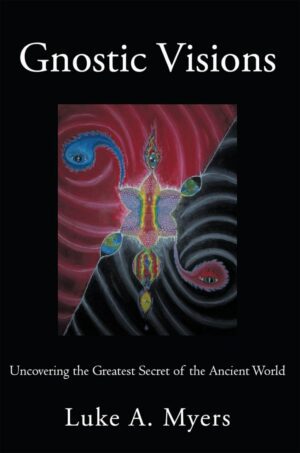
“Gnostic Visions: Uncovering the Greatest Secret of the Ancient World” by Luke A. Myers

"Gnostic texts are filled with encounters of strange other worldly beings, journeys to visionary heavenly realms, and encounters with the presence and spirit of the divine. In Gnostic Visions, author and Gnostic scholar Luke A. Myers presents evidence demonstrating how Gnostic visions were created and the connection these visions have to naturally occurring visionary compounds that are still in existence today. The culmination of more than ten years of research, Gnostic Visions advances the understanding of classical ethnobotany, Gnosticism, and the genesis of early Christian history. In this book the author discusses the prehistoric foundations of early human religion as well as the visionary religious traditions of the classical Greeks and Egyptians. Using these as...>>