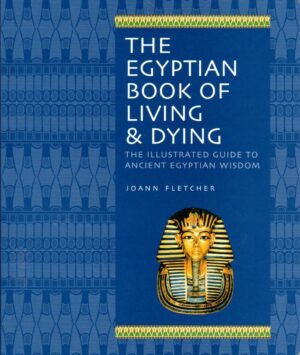
28.12.2020 “The Egyptian Book of Living and Dying” by Joann Fletcher (2009 ed) Magick Matters "An illustrated collection of ancient Egyptian mythology and ritual encompassing the gods, creation, life, death and the afterlife. In addition to the astonishing cultural legacy of artifacts and burial sites that the ancient Egyptians left behind, there is also a rich body of compelling writings about the quest for immortality and humankind’s progress from birth to death and into the mysterious realm of the afterlife, which they called the Underworld. The Egyptian Book of Living and Dying traces the stages of life from conception to the life beyond the tomb. This cycle is set against the eternal backdrop of the cosmos – the gods, the movement of the sun, the symbolism of the stars,...>> View
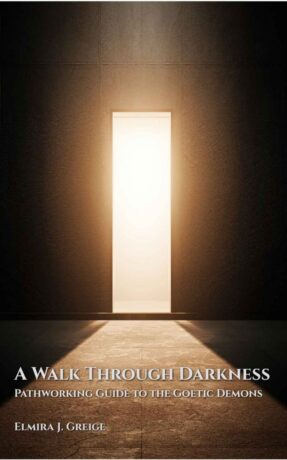
27.12.2020 “A Walk Through Darkness: Pathworking Guide to the Goetic Demons” by Elmira J. Greige Magick Matters "Working with demons can be powerful, but you need to understand how to use that power to wield it effectively. Unlocking the power of the 72 demons of the Goetia will allow your magickal work to be infused with power – you can have access to knowledge, make significant changes in yourself, influence others, and change the world around you. This book combines working with the traditional 72 demons of the Goetia (in the Lesser Key of Solomon) in a demonolatry tradition and pathworking techniques. In western esoteric traditions, pathworking is employed to explore the concepts and teachings found in the Tree of Life. Using this technique, this book will teach you a way to...>> View
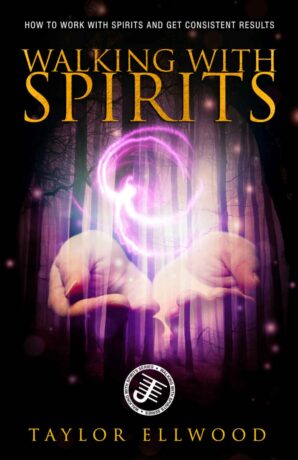
27.12.2020 “Walking with Spirits: How to Work with Spirits and Get Consistent Results” by Taylor Ellwood Magick Matters "In Walking with Spirits, I share my process for connecting and working with spirits that enables you to get consistent results, while building collaborative relationships with the spirits you work with. Working with spirits doesn’t have to involve the coercion of spirits that you find in conventional approaches to spirit work. What I share is an alternative approach that enables you to develop a friendly relationship with the spirits you work with and allows you to get results. Instead of trying to force a spirit to do something for you, you’ll learn the following: How to create a rapport with spirits that allows you to become allies. Why a...>> View
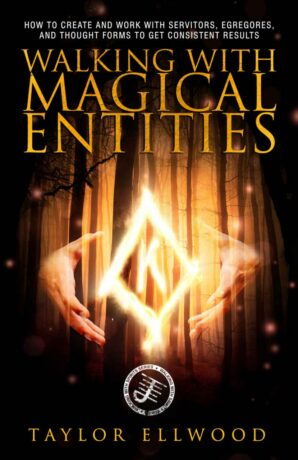
27.12.2020 “Walking with Magical Entities: How to Create and Work with Servitors, Egregores, and Thought Forms to Get Consistent Results” by Taylor Ellwood Magick Matters "In Walking with Magical Entities, I share my streamlined approach for creating and working with magical entities that enables you to get consistent results. I’ll show you how to design and launch entities in three phases, and how to work with them to get better results that transform your life. Creating magical entities doesn’t have to be a complicated operation. All you need is a simple, but effective guide for determining how your entity will work and how it will get you results. This book is that guide, and in it you’ll learn the following: What magical entities are and why we have a symbiotic relationship with them. How...>> View
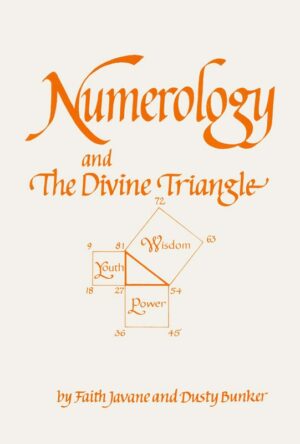
27.12.2020 “Numerology and the Divine Triangle” by Faith Javane and Dusty Bunker Magick Matters "At last a truly comprehensive and authoritative text on numerology! Part I is a complete introduction to esoteric numerology. Part II includes extensive delineations of each of the numbers 1 to 78 and, for the first time in book form, a synthesis of numerology, astrology and the Tarot. Each number is explained as personal number vibrations, as a temporary number vibration, in terms of its astrological correspondence and in terms of its Tarot symbolism. Each of the Tarot cards is illustrated. Numerology and the Divine Triangle is the book to which all books on the subject will be compared from now on."...>> View