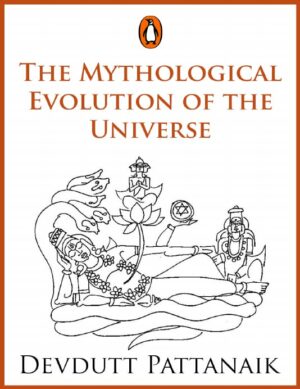
17.02.2021 “The Mythological Evolution of the Universe” by Devdutt Pattanaik Magick Matters "Ancient texts—or Vedas—were written for us to make sense of the universe that we live in. It is, however, believed that that the Vedas are of non-human origin and contain timeless wisdom. The Vedas acknowledge the existence of 'jiva' or soul and that each unique 'jiva' contributes to the constant shaping of the universe. But how does that affect us? Are we collectively moving toward a particular destination that has already been determined? Read on as Devdutt Pattanaik explores these questions and more in The Mythological Evolution of the Universe."...>> View
17.02.2021 “Handbook of Religion and the Authority of Science” edited by James R. Lewis and Olav Hammer Magick Matters "There has been a significant but little-noticed aspect of the interface between science and religion, namely the widespread tendency of religions to appeal to science in support of their truth claims. Though the appeal to science is most evident in more recent religions like Christian Science and Scientology, no major faith tradition is exempt from this pattern. Members of almost every religion desire to see their 'truths' supported by the authority of science - especially in the midst of the present historical period, when all of the comforting old certainties seem problematic and threatened. The present collection examines this pattern in a wide variety of different religions and spiritual movements, and demonstrates the many different ...>> View
17.02.2021 “System: The Shaping of Modern Knowledge” by Clifford Siskin Magick Matters "The role that “system” has played in the shaping and reshaping of modern knowledge, from Galileo and Newton to our own “computational universe.” A system can describe what we see (the solar system), operate a computer (Windows 10), or be made on a page (the fourteen engineered lines of a sonnet). In this book, Clifford Siskin shows that system is best understood as a genre—a form that works physically in the world to mediate our efforts to understand it. Indeed, many Enlightenment authors published works they called “system” to compete with the essay and the treatise. Drawing on the history of system from Galileo's “message from the stars” and Newton's “system of the world” to ...>> View
17.02.2021 “The Foundations of Metaphysics in Science” by Errol E. Harris Magick Matters "Dr. Harris demonstrates in detail how 20th-century scientific theories demand and presuppose a holistic metaphysics, an implication largely ignored by the prevailing schools of philosophy."...>> View
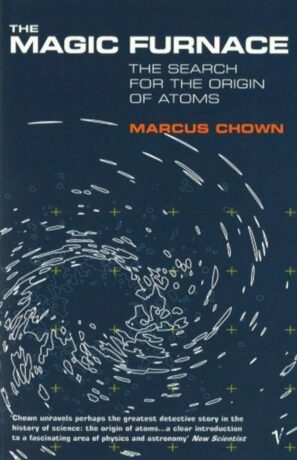
17.02.2021 “The Magic Furnace: The Search for the Origins of Atoms” by Marcus Chown Magick Matters "Every breath you take contains atoms forged in the blistering furnaces deep inside stars. Every flower you pick contains atoms blasted into space by stellar explosions that blazed brighter than a billion suns." Thus begins The Magic Furnace, an eloquent, extraordinary account of how scientists unraveled the mystery of atoms, and helped to explain the dawn of life itself. The historic search for atoms and their stellar origins is truly one of the greatest detective stories of science. In effect, it offers two epics intertwined: the birth of atoms in the Big Bang and the evolution of stars and how they work. Neither could be told without the other, for the stars contain the ...>> View