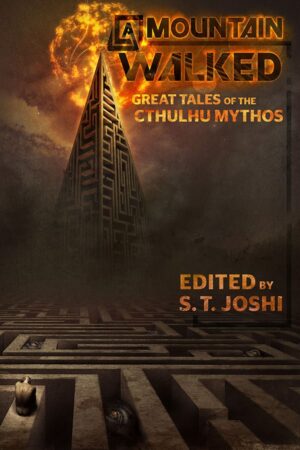
13.02.2021 “A Mountain Walked” edited by S.T. Joshi Magick Matters "H. P. Lovecraft wrote The Call of Cthulhu in 1926, initiating the Cthulhu Mythos, one of the most widely imitated shared-world universes in weird fiction. Even in his lifetime, many other writers added to the Mythos, and after his death hundreds if not thousands of authors of weird, fantasy, and science fiction have added their distinctive elaborations on Lovecraft’s basic themes and ideas. This volume features some of the best Cthulhu Mythos writing over the past century. Beginning with such rare but classic stories as Mearle Prout’s The House of the Worm and Robert Barbour Johnson’s Far Below, from the pages of Weird Tales, the anthology moves on to James Wade’s novella The Deep Ones...>> View
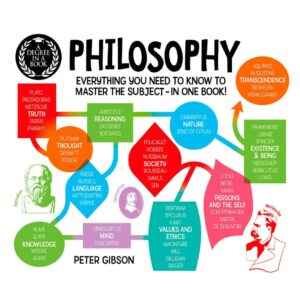
13.02.2021 “A Degree in a Book: Philosophy: Everything You Need to Know to Master the Subject – in One Book!” by Peter Gibson Magick Matters "Filled with beautiful full colour diagrams and illustrated throughout, Degree in a Book: Philosophy is a perfect introduction for students and laypeople alike. With mind maps for each chapter, definition boxes, easily digestible features on the history of philosophy and suggestions for further reading, it provides you with everything you need to understand the fundamental issues. Learning philosophy has never been easier. Including ideas from Aristotle and Zeno to Descartes and Wittgenstein, it covers the whole range of western thought."...>> View
13.02.2021 “Fragments of an Infinite Memory: My Life with the Internet” by Mael Renouard Magick Matters “One day, as I was daydreaming on the boulevard Beaumarchais, I had the idea—it came and went in a flash, almost in spite of myself—of Googling to find out what I’d been up to and where I’d been two evenings before, at five o’clock, since I couldn’t remember on my own.” So begins Maël Renouard’s Fragments of an Infinite Memory, a provocative and elegant inquiry into life in a wireless world. Renouard is old enough to remember life before the internet but young enough to have fully accommodated his life to the internet and the gadgets that support it. Here this young philosopher, novelist, and translator tries out a series of conjectures on how...>> View
13.02.2021 “Information and the Nature of Reality: From Physics to Metaphysics” edited by Paul Davies and Niels Henrik Gregersen Magick Matters "Many scientists regard mass and energy as the primary currency of nature. In recent years, however, the concept of information has gained importance. Why? In this book, eminent scientists, philosophers and theologians chart various aspects of information, from quantum information to biological and digital information, in order to understand how nature works. Beginning with a historical treatment of the topic, the book also examines physical and biological approaches to information, and its philosophical, theological and ethical implications."...>> View
13.02.2021 “Ideology and Utopia” by Karl Mannheim Magick Matters "This book is concerned with the problem of how men actually think. The aim of these studies is to investigate not how thinking appears in textbooks on logic, but how it really functions in public life and in politics as an instrument of collective action. Philosophers have too long concerned themselves with their own thinking. When they wrote of thought, they had in mind primarily their own history, the history of philosophy, or quite special fields of knowledge such as mathematics or physics. This type of thinking is applicable only under quite special circumstances, and what can be learned by analysing it is not directly transferable to other spheres of life. Even when it is...>> View