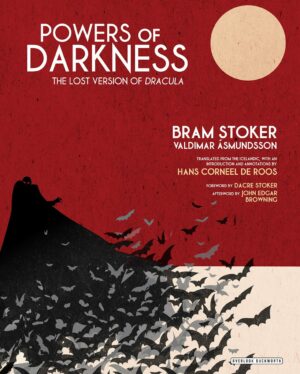
“Powers of Darkness: The Lost Version of Dracula” by Bram Stoker and Valdimar Ásmundsson

"Powers of Darkness is an incredible literary discovery: In 1900, Icelandic publisher and writer Valdimar Ásmundsson set out to translate Bram Stoker’s world-famous 1897 novel Dracula. Called Makt Myrkranna (literally, “Powers of Darkness”), this Icelandic edition included an original preface written by Stoker himself. Makt Myrkranna was published in Iceland in 1901 but remained undiscovered outside of the country until 1986, when Dracula scholarship was astonished by the discovery of Stoker’s preface to the book. However, no one looked beyond the preface and deeper into Ásmundsson’s story. In 2014, literary researcher Hans de Roos dove into the full text of Makt Myrkranna, only to discover that Ásmundsson hadn’t merely translated Dracula but had ...>>

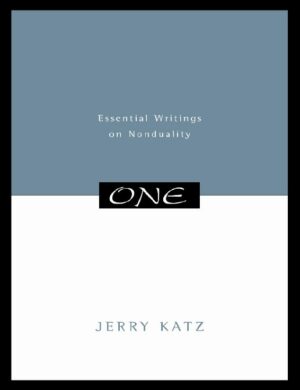
“One: Essential Writings on Nonduality” by Jerry Katz

"This book compiles the most lively expressions of nonduality, which are the understanding that existence is one undivided whole and that the daily distinctions we make within this unity are useful, but not ultimately true. The book conveys in a nonacademic style what nonduality itself is, including lively, challenging, diverse passages from the major traditions of Buddhism, Taoism, Hinduism, Christianity, Sufism, Judaism, Taoism, and Native American Tradition. You'll also read about the nondual perspectives of psychotherapy, art, education, and the movie The Matrix. The core of the book is two chapters on the teachings of Ramana Maharshi, which were edited specifically for this work by David Godman and approved by Sri Ramanasramam. Covering many traditions ...>>
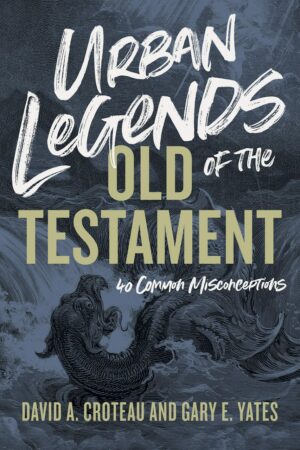
“Urban Legends of the Old Testament: 40 Common Misconceptions” by David A. Croteau and Gary Yates

"Urban Legends of the Old Testament surveys forty of the most commonly misinterpreted passages in the Old Testament. These “urban legends” often arise because interpreters neglect a passage’s context, misuse historical background information, or misunderstand the original language of the text. With a pastoral tone and helpful explanations of where the error originally occurred, authors David A. Croteau and Gary E. Yates tackle legendary biblical misinterpretations of topics like the origin of evil or the purpose of Mosaic food laws, as well as common misconceptions about dinosaurs, or NASA discovering Joshua’s long day. Urban Legends of the Old Testament will help readers avoid missteps in the interpretation of key biblical texts while modeling interpretative ...>>

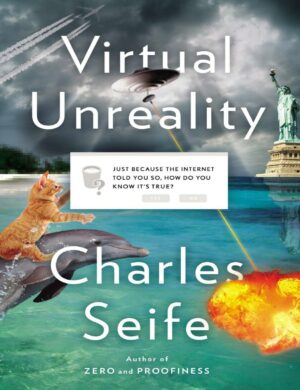
“Virtual Unreality: Just Because the Internet Told You, How Do You Know It’s True?” by Charles Seife

"Digital information is a powerful tool that spreads unbelievably rapidly, infects all corners of society, and is all but impossible to control—even when that information is actually a lie. In Virtual Unreality, Charles Seife uses the skepticism, wit, and sharp facility for analysis that captivated readers in Proofiness and Zero to take us deep into the Internet information jungle and cut a path through the trickery, fakery, and cyber skullduggery that the online world enables. Taking on everything from breaking news coverage and online dating to program trading and that eccentric and unreliable source that is Wikipedia, Seife arms his readers with actual tools—or weapons—for discerning truth from fiction online."...>>

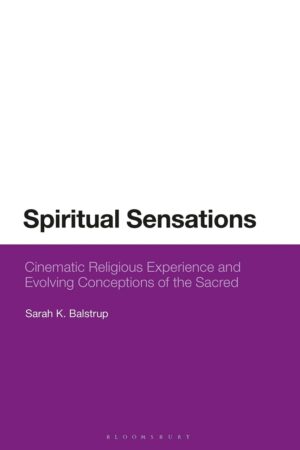
“Spiritual Sensations: Cinematic Religious Experience and Evolving Conceptions of the Sacred” by Sarah K. Balstrup

"The secular, pluralist culture of the West encourages a subjective approach to spiritual truth where stimulating emotional experiences, such as those provided by film, can contribute to personal conceptions of the sacred. Examining Stanley Kubrick's 2001: A Space Odyssey (1968) as the principal case-study and Gaspar Noé's Enter the Void (2009) and Lars von Trier's Melancholia (2011) as comparative examples, Sarah Balstrup argues that these directors harness the affective properties of film to generate altered states of perception in a manner analogous to religious practice. Powerful feelings of dissociation and indescribable significance typical of mystical testimony appear in viewer responses to these films, demonstrating the continued sacralisation of such states of mind. In their own ...>>