Skip to content
"Your words and actions have tremendous power. Learn how to harness that power to change your life and make the world a better place with this modern spell book—regardless of your religion or spiritual leanings. Contemporary life is confusing and it's easy to feel out of control. In this smart, secular witchcraft manual, Sage Liskey shows you how to get in touch with the mental, emotional, and physical aspects needed for spell casting.
Chapters include guidance on finding your highest form, understanding your wizarding type, controlling your magic, overcoming roadblocks to your power such as depression and trauma, finding love or your ideal career, working with magical objects, facing a crisis, and community spell...>>
"A friendly guide to a wide array of divination tools, both ancient and modern, from internationally known spiritual teacher and author Radleigh Valentine.
With a little help from the angels and a dash of fairy dust, Radleigh Valentine invites you to find your perfect "language" for communicating with the Universe to manifest your most cherished dreams! This simple how-to guide explores different divination tools, also known as oracles, which are simply methods of getting clarity and assistance from Source. You'll learn the basics of working with the magic of angels, fairies, tarot and oracle cards, Lenormand, runes, pendulums, the I Ching, astrology, numerology, meditation, and mantras--all delivered with Radleigh's gentle sense of humor and deft...>>
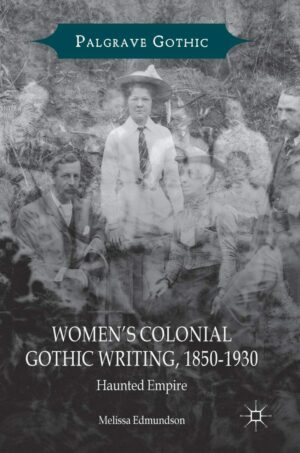
"This book explores women writers’ involvement with the Gothic. The author sheds new light on women’s experience, a viewpoint that remains largely absent from male-authored Colonial Gothic works. The book investigates how women writers appropriated the Gothic genre―and its emphasis on fear, isolation, troubled identity, racial otherness, and sexual deviancy―in order to take these anxieties into the farthest realms of the British Empire. The chapters show how Gothic themes told from a woman’s perspective emerge in unique ways when set in the different colonial regions that comprise the scope of this book: Canada, the Caribbean, Africa, India, Australia, and New Zealand. Edmundson argues that women’s Colonial Gothic writing tends to...>>