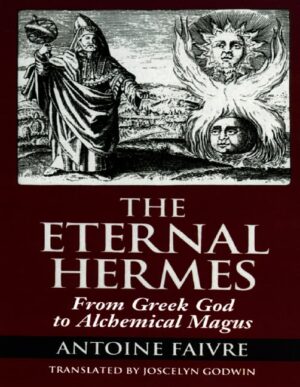
“The Eternal Hermes: From Greek God to Alchemical Magus” by Antoine Faivre

"Hermes, the fascinating, mercurial messenger of the gods, eloquent revealer of hidden wisdom, and guardian of occult knowledge has played a central role in the development of esotericism in the West. Drawing upon many rare books and manuscripts, this highly illustrated work explores the question of where Hermes Trismegistus came from, how he came to be a patron of the esoteric traditions, and how the figure of Hermes has remained lively and inspiring to our own day."...>>

“A General Theory of Magic” by Marcel Mauss

"First written by Marcel Mauss and Henri Humbert in 1902, A General Theory of Magic gained a wide new readership when republished by Mauss in 1950. As a study of magic in 'primitive' societies and its survival today in our thoughts and social actions, it represents what Claude Lévi-Strauss called, in an introduction to that edition, the astonishing modernity of the mind of one of the century's greatest thinkers. The book offers a fascinating snapshot of magic throughout various cultures as well as deep sociological and religious insights still very much relevant today. At a period when art, magic and science appear to be crossing paths once again, A General Theory of Magic presents itself ...>>

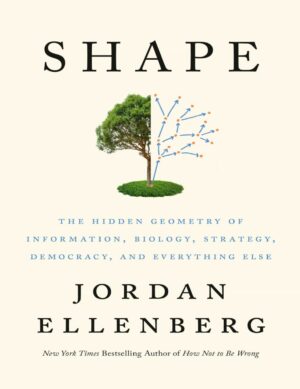
“Shape: The Hidden Geometry of Information, Biology, Strategy, Democracy, and Everything Else” by Jordan Ellenberg

"How should a democracy choose its representatives? How can you stop a pandemic from sweeping the world? How do computers learn to play Go, and why is learning Go so much easier for them than learning to read a sentence? Can ancient Greek proportions predict the stock market? (Sorry, no.) What should your kids learn in school if they really want to learn to think? All these are questions about geometry. For real. If you're like most people, geometry is a sterile and dimly remembered exercise you gladly left behind in the dust of ninth grade, along with your braces and active romantic interest in pop singers. If you recall any of it, it's plodding ...>>

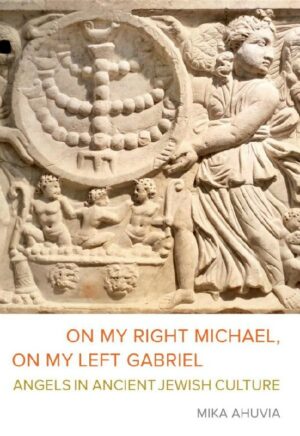
“On My Right Michael, On My Left Gabriel: Angels in Ancient Jewish Culture” by Mika Ahuvia

"Angelic beings can be found throughout the Hebrew Bible, and by late antiquity the archangels Michael and Gabriel were as familiar as the patriarchs and matriarchs, guardian angels were as present as one’s shadow, and praise of the seraphim was as sacred as the Shema prayer. Mika Ahuvia recovers once-commonplace beliefs about the divine realm and demonstrates that angels were foundational to ancient Judaism. Ancient Jewish practice centered on humans' relationships with invisible beings who acted as intermediaries, role models, and guardians. Drawing on non-canonical sources—incantation bowls, amulets, mystical texts, and liturgical poetry—Ahuvia shows that when ancient men and women sought access to divine aid, they turned not only to their rabbis or to God ...>>

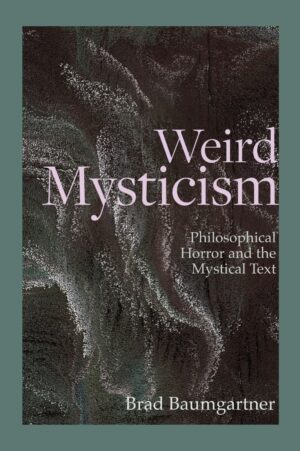
“Weird Mysticism: Philosophical Horror and the Mystical Text” by Brad Baumgartner

"Weird Mysticism identifies and evaluates a new category of theoretical inquiry by showing the influence of speculative writing on three intersecting critical categories: horror fiction, apophatic mysticism, and philosophical pessimism. Exploring the work of Thomas Ligotti, Georges Bataille, and E. M. Cioran, Baumgartner argues that these “weird mystics” employ an innovative mode of negative writing that seeks to merge new conceptions of reality. While exploring perennial questions about “the absolute,” the Outside, and other philosophical concepts, these authors push the limits of representation, experimenting with literary form, genre-bending, and aphoristic discourse. As their works reveal, the category of weird mysticism both conjoins and obscures the link between traditional mysticism and philosophical horror fiction, with ...>>