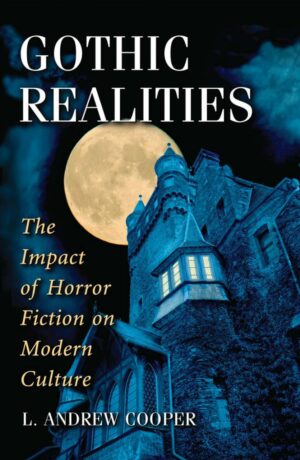
“Gothic Realities: The Impact of Horror Fiction on Modern Culture” by L. Andrew Cooper

"Eighteenth-century critics believed Gothic fiction would inspire deviant sexuality, instill heretical beliefs, and encourage antisocial violence—this book puts these beliefs to the test. After examining the assumptions behind critics' fears, it considers nineteenth-century concerns about sexual deviance, showing how Frankenstein, Dr. Jekyll and Mr. Hyde, Dorian Gray, and other works helped construct homosexuality as a pathological, dangerous phenomenon. It then turns to television and film, particularly Buffy the Vampire Slayer and David DeCoteau's direct-to-video movies, to trace Gothicized sexuality's lasting impact. Moving to heretical beliefs, Gothic Realities surveys ghost stories from Dickens's A Christmas Carol to Poltergeist, articulating the relationships between fiction and the "real" supernatural. Finally, it considers connections between Gothic horror ...>>
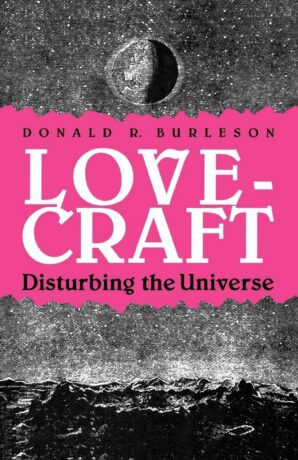
“Lovecraft: Disturbing the Universe” by Donald R. Burleson

"Howard Phillips Lovecraft (1890–1937) has been described variously as the successor to Edgar Allan Poe, a master of the Gothic horror tale, and one of the father of modern supernatural fantasy fiction. Published originally in pulp magazines, his works have grown in popularity since his death, so that more than thirty editions are currently in print. Yet only recently has Lovecraft received serious attention from literary critics. And until now no one has examined his work from a post-structuralist perspective. Donald Burleson fills that void, for the first time in an extended study bringing the resources of deconstruction to bear on the works of this modern gothicist. In an introductory overview, Burleson gives an unusually ...>>

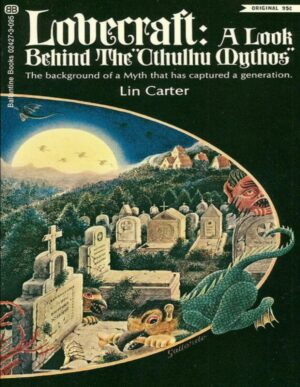
“Lovecraft: A Look Behind The Cthulhu Mythos” by Lin Carter

"The Cthulhu Mythos... What arcane horrors, dimlit landscapes, nauseating monstrosities are conjured up by these words! The creation of H. P. Lovecraft, the Mythos has fired the imaginations of generations of readers—and of writers, giving rise to a fresh host of stories by innumerable authors who have added immeasurably to the original concept. Who was Lovecraft? What was he like? What were his sources, and did he believe in any part of the grisly worlds he created in the Mythos? In clear, affectionately objective prose, Lin Carter examines the Myth, and the man behind the Myth."...>>

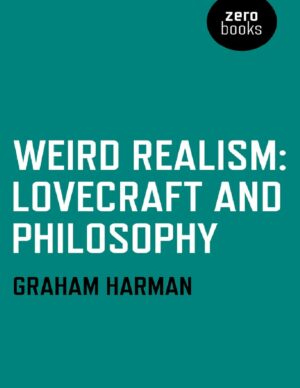
“Weird Realism: Lovecraft and Philosophy” by Graham Harman

"As Hölderlin was to Martin Heidegger and Mallarmé to Jacques Derrida, so is H.P. Lovecraft to the Speculative Realist philosophers. Lovecraft was one of the brightest stars of the horror and science fiction magazines, but died in poverty and relative obscurity in the 1930s. In 2005 he was finally elevated from pulp status to the classical literary canon with the release of a Library of America volume dedicated to his work. The impact of Lovecraft on philosophy has been building for more than a decade. Initially championed by shadowy guru Nick Land at Warwick during the 1990s, he was later discovered to be an object of private fascination for all four original members of the ...>>