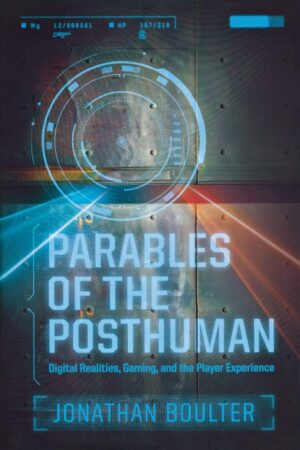
05.02.2022 “Parables of the Posthuman: Digital Realities, Gaming, and the Player Experience” by Jonathan Boulter Magick Matters "In its intimate joining of self and machine, video gaming works to extend the body into a fluid, dynamic, unstable, and discontinuous entity. While digital gaming and culture has become a popular field of academic study, there has been a lack of sustained philosophical analysis of this direct gaming experience. In Parables of the Posthuman: Digital Realities, Gaming, and the Player Experience, author Jonathan Boulter addresses this gap by analyzing video games and the player experience philosophically. Finding points of departure in phenomenology and psychoanalysis, Boulter argues that we need to think seriously about what it means to enter into a relationship with the game machine and to assume (or to have conferred upon...>> View
05.02.2022 “The Besht: Magician, Mystic, and Leader” by Immanuel Etkes Magick Matters "Founded in Eastern Europe in the eighteenth century, the Hasidic movement and its religious thinking have dramatically transformed modern Judaism. The figure of the Ba’al Shem Tov (known in acronym form as the BeSHT)―the purported founder of the Hasidic movement―has fascinated scholars, Jewish philosophers, and laypeople interested in popular Jewish mysticism in general and the contemporary Hasidic movement in all its variety. In this volume, Etkes enters a rich and heated debate over the origins of the movement, as well as the historicity of its mythic founder, Rabbi Israel Ba’al Shem Tov, who lived much of his life as a miracle worker. The eighteenth century, as Etkes vividly portrays, was the heyday of the...>> View
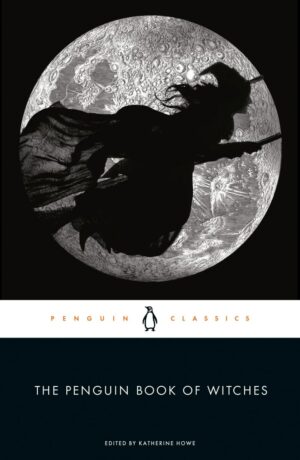
05.02.2022 “The Penguin Book of Witches” edited by Katherine Howe Magick Matters "Chilling real-life accounts of witches, from medieval Europe through colonial America, compiled by the New York Times bestselling author of The Physick Book of Deliverance Dane and The Daughters of Temperance Hobbs From a manual for witch hunters written by King James himself in 1597, to court documents from the Salem witch trials of 1692, to newspaper coverage of a woman stoned to death on the streets of Philadelphia while the Continental Congress met, The Penguin Book of Witches is a treasury of historical accounts of accused witches that sheds light on the reality behind the legends. Bringing to life stories like that of Eunice Cole, tried for attacking a teenage girl with a rock...>> View
04.02.2022 “The Calling: A 12-Week Science-Based Program to Discover, Energize, and Engage Your Soul’s Work” by Julia Mossbridge Magick Matters "The Calling offers a groundbreaking twelve-week program to help you discover more fulfilling work, more authentic relationships, and a deeper sense of connection. It’s no secret that many working professionals are dissatisfied with their occupations—it’s been estimated that more than 75 percent of employees in the US are disengaged or otherwise unhappy in their jobs. This dissatisfaction is often seen as a structural problem—one that can be solved by shuffling people in and out of positions until they find the right fit. Cognitive neuroscientist, researcher, and spiritual seeker Julia Mossbridge has a different take. According to Mossbridge, this lack of engagement and satisfaction in the workforce is a spiritual problem: we find ourselves in stressful or...>> View
04.02.2022 “The Premonition Code: The Science of Precognition, How Sensing the Future Can Change Your Life” by Theresa Cheung and Julia Mossbridge Magick Matters "An in-depth study into the cutting-edge science of ‘sensing’ the future, or precognition—from a cognitive neuroscientist and the bestselling author of The Dream Dictionary In this groundbreaking book, bestselling author Theresa Cheung joins forces with cognitive neuroscientist Julia Mossbridge, PhD, Director of the Innovation Lab at The Institute of Noetic Sciences (IONS). Together they reveal revolutionary new research showing that sensing the future is possible; they also provide practical tools and techniques you can use to develop your own powers of precognition. Precognition is the scientific name for the knowledge or perception of the future, obtained through extrasensory means. Often called ‘premonition’, precognition is the most frequently reported of all extrasensory perception (ESP) experiences, occurring...>> View