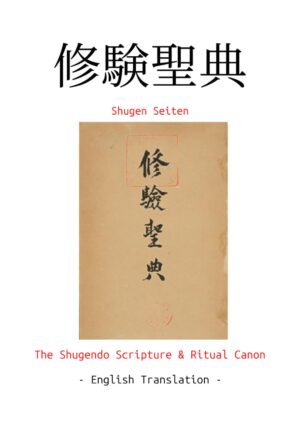
“Shugen Seiten: The Shugendo Scripture & Ritual Canon” translated by Kusuri

"Shugendō is deeply rooted in esoteric traditions (Mikkyō). This text contains mantras (shingon), mudras, and ritual instructions that were historically considered secret. Traditionally, much of this material was restricted and strictly transmitted orally from master to disciple (kuden). Readers are asked to approach these specific sections with an awareness of their sacred and historically guarded nature."...>>

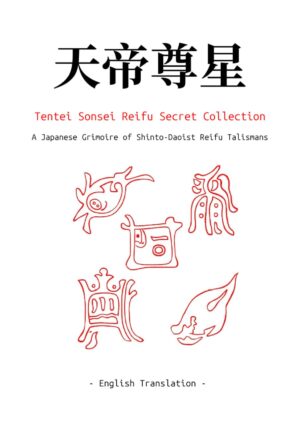
“Tentei Sonsei Reifu Secret Collection: A Japanese Grimoire of Shinto-Daoist Reifu Talismans” by Takanori Fujisaki (English translation by Kusuri)

"In 1870 (early Meiji), the Japanese imperial government had banned Onmyōdō and abolished the Onmyōryō (the official bureau of divination) as part of its push toward westernization and State Shinto. This ban pushed practitioners, diviners, and esoteric compilers into private publishing. During the late Meiji era (around 1900–1910), print technology allowed massive collections of previously secret, hand-copied talismanic manuals to be compiled and sold commercially to private practitioners, priests, and laypeople. Published in 1910, Tentei Sonsei Reifu Secret Collection (天帝尊星霊符秘密集伝) was one of these comprehensive compilations. While modern popular culture labels almost all Japanese talismanic magic as Onmyōdō, the contents of this specific book are more accurately described as Shinto-Daoist Esotericism (Shinsen-dō / ...>>

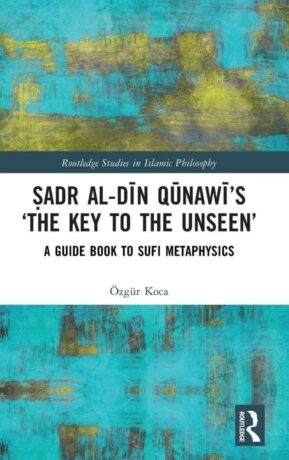
“Ṣadr al-Dīn Qūnawī’s The Key to the Unseen” by Özgür Koca

"Ṣadr al-Dīn Qūnawī’s The Key to the Unseen: A Guide Book to Sufi Metaphysics offers the first systematic articulation of Ibn ʿArabī’s revolutionary teachings, presenting one of the most significant works of Islamic spirituality and a cornerstone of Sufi metaphysics through the profound synthesis of his foremost disciple, Ṣadr al-Dīn Qūnawī. Spanning the realms of mysticism, philosophy, and theology, this foundational text explores the intricate relationships between divine manifestation, cosmic hierarchy, and spiritual realization. From the systematic presentation of metaphysical principles to the practical dimensions of mystical experience, Qūnawī examines how rigorous intellectual inquiry can illuminate the deepest questions of existence while remaining rooted in lived spiritual transformation. Through his masterful synthesis, contributors to ...>>

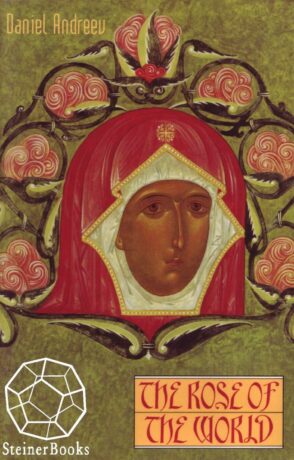
“The Rose of the World” by Daniel Andreev (translated by Jordan Roberts)

"Completed in 1959, hidden from the Soviet secret police for twenty years, The Rose of the World was first made public through excerpts in the magazine Novy Mir in 1989. The Rose of the World is a unique and poetic cosmological treatise, passionately written out of personal spiritual experience. It offers a prophetic call for the spiritual reunification of all people and an open and harmonious relationship among the great world religions. For Daniel Andreev, The Rose of the World is a spiritual flower whose roots are in heaven; each petal is a unique image of the great world religions and cultures, and the whole flower is their joint co-creation with God. Lindisfarne Books is ...>>

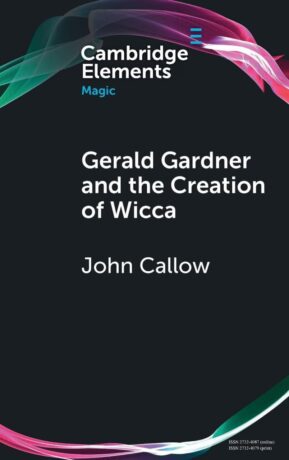
“Gerald Gardner and the Creation of Wicca” by John Callow

"Gerald Gardner (1884–1964) provided the central inspiration for Wicca, as a modern, revived, form of Pagan witchcraft. As such, his cultural and religious significance has grown exponentially over the 60 years since his death. "A Rough Magic" re-evaluates the sources of Gardner's inspiration, redefines his early life within the context of colonial Malaya and the opium trade, and emphasises his vision and ability in fashioning an entirely new synthesis of magical beliefs drawn from both Eastern and Western traditions. In so doing, he stripped away the demonic elements of witchcraft and emphasised Wicca as a creative, mutable and undogmatic nature religion, serving as both fertility cult and a unique source of personal empowerment, that was ...>>