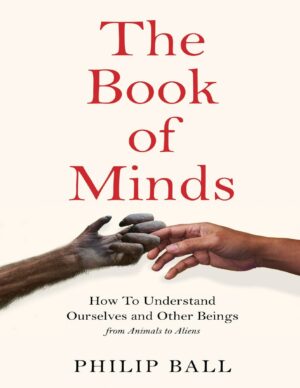
25.06.2022 “The Book of Minds: How to Understand Ourselves and Other Beings, From Animals to Aliens” by Philip Ball Magick Matters "Understanding the human mind and how it relates to the world of experience has challenged scientists and philosophers for centuries. How do we even begin to think about ‘minds’ that are not human? That is the question explored in this ground-breaking book. Award-winning science writer Philip Ball argues that in order to understand our own minds and imagine those of others, we need to move on from considering the human mind as a standard against which all others should be measured. Science has begun to have something to say about the properties of mind; the more we learn about the minds of other creatures, from octopuses to chimpanzees, to imagine the potential minds of computers...>> View
24.06.2022 “Intercepts: A horror novel” by T.J. Payne Magick Matters "Joe works at a facility that performs human experimentation. His work just followed him home. The government wanted to unlock hidden abilities in the human mind. They put subjects in extreme sensory deprivation. All the test subjects went violently insane. But the research continued. Today it has been perfected. Almost perfected."...>> View
24.06.2022 “How to Create a Glitch in the Matrix: The Complete Series” by Joshuasaurus 319 Magick Matters "The complete handbook for any active believer in simulation theory, designed to assist one in creating a glitch in reality and see past the veil. It includes all five books of the Series."...>> View
24.06.2022 “Simulation Model: Mechanism Of The Universe” by Dr. Amschel (pseudonym) Magick Matters "The book presents the science behind our simulated reality and the scientific principles of the theoretical framework of a simulation model of the universe. If you ever wondered who you are, where you are, what you are, why you are here, what is the meaning of life, no mistake about it you came to the right place to find out! Maybe the idea “Simulated universe” sounds extraordinary but if you investigate further the facts and essence of the subject eventually you will discover the truth. Quantum physics has determined that all atoms in the universe are predominantly empty and mass-less, with no identity or location, and without the interference of the Higgs mass-generating mechanism the...>> View
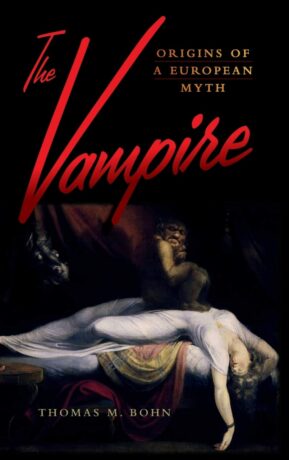
24.06.2022 “The Vampire: Origins of a European Myth” by Thomas M. Bohn Magick Matters "Even before Bram Stoker immortalized Transylvania as the homeland of his fictional Count Dracula, the figure of the vampire was inextricably tied to Eastern Europe in the popular imagination. Drawing on a wealth of heretofore neglected sources, this book offers a fascinating account of how vampires―whose various incarnations originally emerged from the folk traditions of societies throughout the world―became identified with such a specific region. It demonstrates that the modern conception of the vampire was born in the crucible of the Enlightenment, embodying a mysterious, Eastern “otherness” that stood opposed to Western rationality."...>> View