Magick Matters

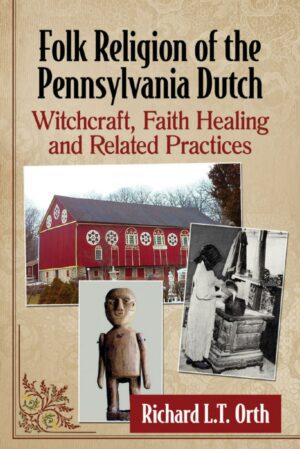
“Folk Religion of the Pennsylvania Dutch: Witchcraft, Faith Healing and Related Practices” by Richard L.T. Orth (full book)

"For almost three centuries, the "Pennsylvania Dutch"—descended from German immigrants—have practiced white magic, known in their dialect as Braucherei (from the German "brauchen," to use) or Powwowing. The tradition was brought by immigrants from the Rhineland and Switzerland in the 17th and 18th centuries, when they settled in Pennsylvania and in other areas of what is now the eastern United States and Canada. Practitioners draw on folklore and tradition dating to the turn of the 19th century, when healers like Mountain Mary—canonized as a saint for her powers--arrived in the New World. The author, a member of the Pennsylvania Dutch community, describes in detail the practices, culture and history of faith healers and witches. "...>>

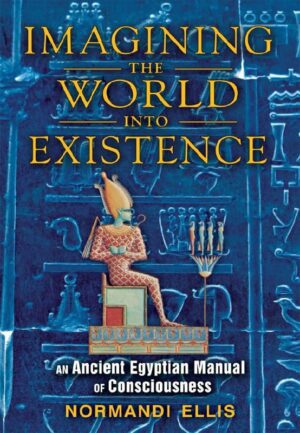
“Imagining the World into Existence: An Ancient Egyptian Manual of Consciousness” by Normandi Ellis (better rip)

"Drawing from the Egyptian Book of the Dead, the Pyramid texts, the Book of Thoth, and other sacred hieroglyphic writings spanning the three millennia of the Egyptian Mystery Traditions, Normandi Ellis reveals the magical language of creation and words of power that enabled the ancient Egyptians to act as co-creators with the gods. Examining the power of hieroglyphic thinking--how thoughts create reality--and the multiple meanings behind every word of power, the author shows how, with the Neteru, we imagine the world into existence, casting a spell of consciousness over the material world. Uncovering the deep layers of meaning and symbol within the myths of the Egyptian gods and goddesses, Ellis investigates the shamanic journeys that...>>

“Gurdjieff: Mysticism, Contemplation, and Exercises” by Joseph Azize

"The Armenian-born mystic, philosopher, and spiritual teacher G. I. Gurdjieff (c.1866-1949) is an enigmatic figure, the subject of a great deal of interest and speculation, but not easily fitting into any of the common categories of "esoteric", "occult", or "New Age". Scholars have for the most part passed over in silence the contemplative exercises presented in Gurdjieff's writings. Although Gurdjieff had intended them to be confidential, some of the most important exercises were published posthumously in 1950 and in 1975. Arguing that an understanding of these exercises is necessary to fully appreciate Gurdjieff's contribution to modern esotericism, Joseph Azize offers the first complete study of the exercises and their theoretical foundation. It shows the continuity...>>

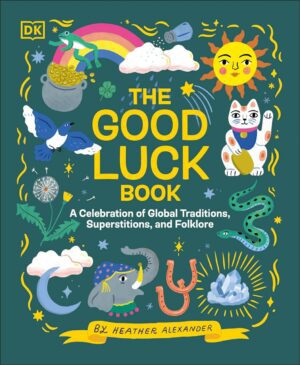
“The Good Luck Book: A Celebration of Global Traditions, Superstitions, and Folklore” by Heather Alexander

"Ever wondered why we knock on wood, cross our fingers, or say "white rabbits" on the first day of the month? Dive in and learn about fascinating traditions and superstitions from all over the world! The Good Luck Book explores the surprising — and sometimes scary — history of the world's most practised traditions and superstitions (and plenty more that you probably won't have heard of!). Discover superstitions old and new from China to Chile, the USA to the Ukraine. Learn how and why they started, and why people still participate in them today. Featuring fascinating topics, including animals, nature, sport, life events, the human body, and lucky locations, The Good Luck Book is packed with...>>
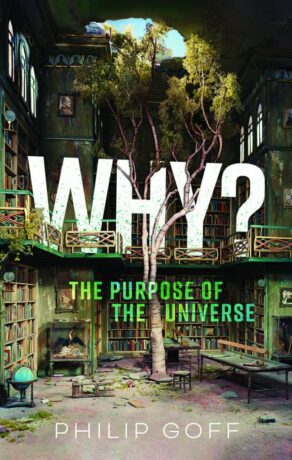
“Why? The Purpose of the Universe” by Philip Goff

"Why are we here? What's the point of existence? On the 'big questions' of meaning and purpose, Western thought has been dominated by the dichotomy of traditional religion and secular atheism. In this pioneering work, Philip Goff argues that it is time to move on from both God and atheism. Through an exploration of contemporary cosmology and cutting-edge philosophical research on consciousness, Goff argues for cosmic purpose: the idea that the universe is directed towards certain goals, such as the emergence of life. In contrast to religious thinkers, Goff argues that the traditional God is a bad explanation of cosmic purpose. Instead, he explores a range of alternative possibilities for accounting for cosmic purpose, from...>>