Magick Matters

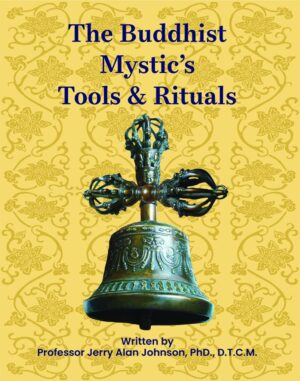
“The Buddhist Mystic’s Tools & Rituals” by Dr. Jerry Alan Johnson

"This second book is a companion to my first book, The Mystical Teachings of the Buddhist, and contains many of the secret teachings, tools, and rituals that were used in ancient times by different Buddhist mystics. Many of these esoteric teachings came from my personal journals, and were obtained from years of training with different Buddhist masters. As much of this information originates from the Northern Treasures tradition, and is specifically associated with the famous Tibetan mystic Padmasambhava (Guru Rinpoche) and his personal energetic practices, to date, I have only passed this information down to my most trusted disciples."...>>

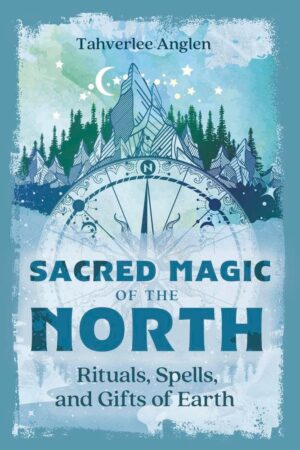
“Sacred Magic of the North: Rituals, Spells, and Gifts of Earth” by Tahverlee Anglen

"First in a new series, this book is a transformational journey into the magic that lives within you, activating the connection between your body and the cycles of nature. Step inside a living circle of earth and spirit, where every breath roots deeper and every sensation hums with meaning. Tahverlee Anglen weaves a tapestry of elemental wisdom and embodiment, helping you remember what your marrow already knows: All magic begins at home, in the flesh, on the land. Tahverlee teaches you how to build altars, work with cards, and make meaningful offerings to spirits before guiding you through a landscape of living earth magic. Each chapter begins with her own heartfelt narrative, then unfurls into ...>>

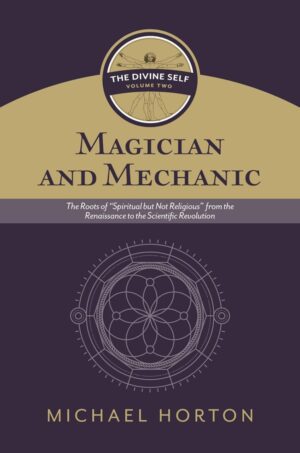
“Magician and Mechanic: The Roots of “Spiritual but Not Religious” from the Renaissance to the Scientific Revolution” by Michael Horton (The Divine Self, vol. 2)

"A stunning history of "spiritual but not religious" thought in Western culture In this second volume of The Divine Self series, Michael Horton explores changing conceptions of the divine self during the historic period from the Renaissance to the Scientific Revolution―a tumultuous era of rethinking humanity’s relationship to God and nature. In Horton’s telling, this period is characterized not by steady diminishment of magic and orthodox religion and a corresponding rise of rational science, but rather by lively and productive interaction between these influences. Horton examines what is at stake for the divine self in this growing tension between magicians and Baconians, and what role each plays in the development of the modern self. He ...>>

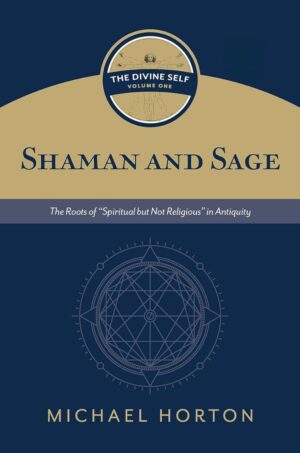
“Shaman and Sage The Roots of “Spiritual but Not Religious” in Antiquity” by Michael Horton (The Divine Self, vol. 1)

"The first volume of Michael Horton’s magisterial intellectual history of "spiritual but not religious" as a phenomenon in Western culture Discussions of the rapidly increasing number of people identifying as “spiritual but not religious” tend to focus on the past century. But the SBNR phenomenon and the values that underlie it may be older than Christianity itself. Michael Horton reveals that the hallmarks of modern spirituality—autonomy, individualism, utopianism, and more—have their foundations in Greek philosophical religion. Horton makes the case that the development of the shaman figure in the Axial Age—particularly its iteration among Orphists—represented a "divine self". One must realize the divinity within the self to break free from physicality and become one with ...>>

“Adventures In Woo Woo: Real-World Chaos Magick” by Tommie Kelly

"Have you ever wondered what a magical life looks like for someone who isn't an absolute beginner, but doesn't claim to be an "Ascended Master" either? Adventures in Woo Woo is a refreshingly honest collection of diary-style essays by Irish artist, writer, musician, and chaos magician Tommie Kelly. Part magical diary, part field report, it documents the real successes, the genuine failures, and all the awkward bits in between of trying to live a practical magical life—Chaos Magic, meditation, sigils, ancestor work—without recycling the same occult theory you've already read a hundred times. What sets it apart is the hindsight. For every original blog entry, Tommie has gone back and written a fresh commentary: where ...>>