Skip to content
Magick Matters
"Alan Chapman and Duncan Barford, two experienced magicians, present an uncensored record of their activities over the course of a year. In their ongoing effort to unleash magick from the dead-end of extreme post-modernism and re-invigorate the notion of 'The Great Work', the authors climb onto the ladder of enlightenment and haul themselves across the abyss, detailing their techniques and experiences as they go. This compendium of articles, essays, dialogues and magickal rituals contains all you need to replicate that process and cross the abyss for yourself, plus plenty more besides: spirits, angels, demons, aliens, Aleister Crowley, Robert Anton Wilson and Austin Osman Spare. The book is written in the usual down-to-earth and humorous style ...>>
"A new paradigm that delivers a genuine transformation of occultism. The author assumes no previous knowledge, only a willingness to explore what magick offers, yet it is apparent to anyone with a background in the subject that Alan Chapman is drawing on a wide range of experience, from classical Crowleyean Magick, to eastern metaphysics, and back again to Discordianism and Chaos Magick. Chapman's writing-style is humorous, direct, seductively logical, and his enthusiasm for the benefits of magick is both tangible and infectious. The novice magician will indeed find themselves equipped to commence all sorts of magickal operations: trance work, enchantment, divination, and even some of the higher forms of spiritual development. To experienced magicians, Chapman ...>>
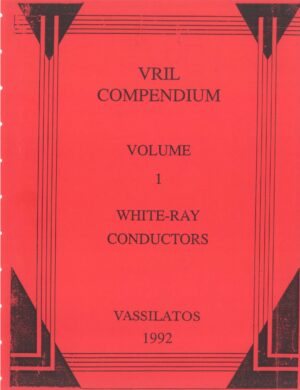
"Eleven volumes, thousands of pages of patents, diagrams, articles, and historical reconstruction — Gerry Vassilatos's lifework on what the Borderland Sciences Research Foundation called the most comprehensive treatment of Vril energy ever assembled. Published between 1992 and 1995, the Compendium argues that the heroic age of wireless — Loomis, Stubblefield, Meucci, Dolbear, Tesla — was not really electrical at all, but the empirical exploration of an older, deeper, "thready, living, glowing" force the medieval Europeans called woivre and that Bulwer-Lytton named Vril.
Each volume gathers period patents and contemporary commentary around a phase of that exploration. Vol. 1 (White Ray Conductors) opens with lightning rods, aerial batteries, and the "vrillic detritus" of nineteenth-century atmospheric research. ...>>