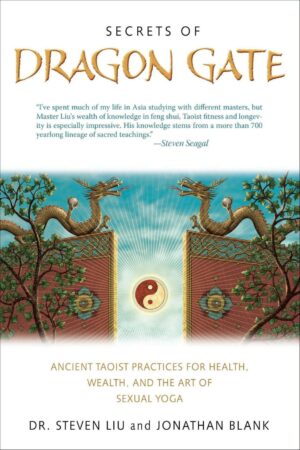
17.11.2021 “Secrets of Dragon Gate: Ancient Taoist Practices for Health, Wealth, and the Art of Sexual Yoga” by Steven Liu and Jonathan Blank Magick Matters "From simple breathing exercises that make you feel healthier and more alive to advanced sexual yoga, The Secrets of Dragon Gate is the key to your unique path to health, wealth, and spiritual fulfillment. The Dragon Gate School is known for its singular combination of sexual yoga and dream yoga practices; mystical divination methods for choosing a wise and fruitful path; Chi-gung and martial arts practices for health and longevity; and profound philosophy, based on the I Ching (Book of Changes) and the five elements, that provides a deep insight into the nature of reality. Incorporate the mysterious and ancient wisdom of the Dragon Gate School of Taoism into your daily life, and find answers ...>> View
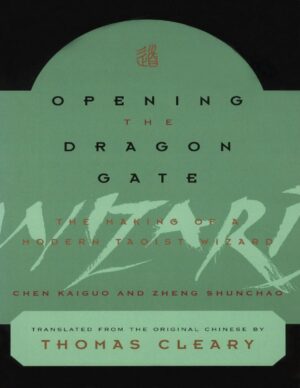
17.11.2021 “Opening the Dragon Gate: The Making of a Modern Taoist Wizard” by Chen Kaiguo and Zheng Shunchao (kindle ebook version) Magick Matters "This authorized biography of the contemporary Taoist expert Wang Liping (1949 -) tells the true story of his apprenticeship in Taoist wizardry, as well as Taoist principles and secrets of inner transformation. The 18th-generation transmitter of Dragon Gate Taoism, Wang Liping is heir to a tradition of esoteric knowledge and practice accumulated and refined over eleven centuries. This is the first English translation by noted writer Thomas Cleary of the authorized biography by two longtime disciples of this living master of the Dragon Gate branch of the Complete Reality school of Taoism, which integrated Buddhism and Confucianism into a comprehensive new form of Taoism."...>> View
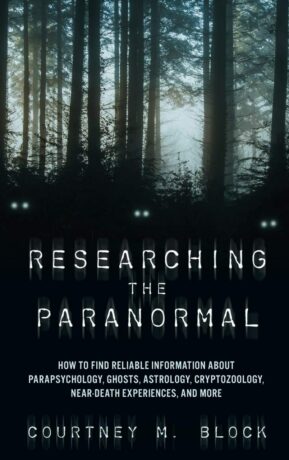
17.11.2021 “Researching the Paranormal: How to Find Reliable Information about Parapsychology, Ghosts, Astrology, Cryptozoology, Near-Death Experiences, and More” by Courtney M. Block Magick Matters "In this book, you’ll find an assortment of resources that seriously examine various paranormal topics. You’ll also learn how you can apply the components of credibility to find additional research as well as information on conducting your own paranormal investigations."...>> View
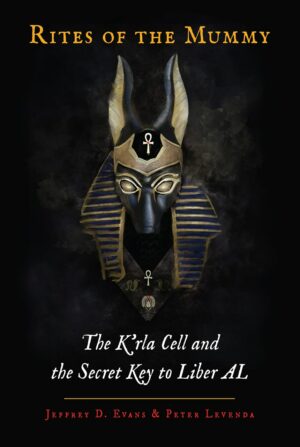
17.11.2021 “Rites of the Mummy: The K’rla Cell and the Secret Key to Liber AL” by Jeffrey D. Evans and Peter Levenda Magick Matters "An arcane ritual reveals a code hidden within Thelema’s most holy book. Over a period of several years, the former head of Kenneth Grant’s Typhonian Order in the United States, conducted a bizarre sexual ritual with elements of Thelema, Lovecraft, and the Egyptian mummification ceremony to unlock a mathematical code buried in plain sight in Aleister Crowley’s Book of the Law. Jeffrey Evans, a follower of Aleister Crowley’s Thelema since his teenage years, had an encounter on a bridge in Washington, DC, with a being he identified as his holy guardian angel. This being—Karla—provided him with the inspiration to begin a series of rituals incorporating Egyptian and Lovecraftian elements in an effort to traverse ...>> View
17.11.2021 “Ghostly Matters: Haunting and the Sociological Imagination” by Avery F. Gordon Magick Matters "Drawing on a range of sources, including the fiction of Toni Morrison and Luisa Valenzuela (He Who Searches), Avery Gordon demonstrates that past or haunting social forces control present life in different and more complicated ways than most social analysts presume. Written with a power to match its subject, Ghostly Matters has advanced the way we look at the complex intersections of race, gender, and class as they traverse our lives in sharp relief and shadowy manifestations."...>> View