Magick Matters

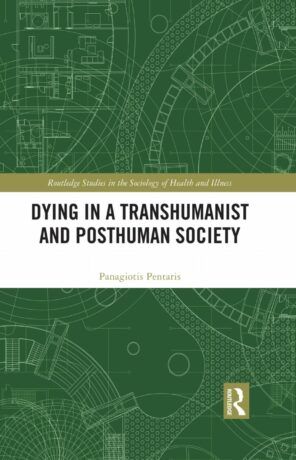
“Dying in a Transhumanist and Posthuman Society” by Panagiotis Pentaris

"Exploring both the intrapersonal (moral) and interpersonal (ethical) nature of death and dying in the context of their development (philosophical), Dying in a Transhumanist and Posthuman Society shows how death and dying have been and will continue to be governed in any given society. Drawing on transhumanism and discourses about posthumanity, life prolongation and digital life, the book analyses death, dying and grief via the governance of dying. It states that the bio-medical dimensions of our understanding of death and dying have predominated not only the discourses about death in society and the care of the dying, but their policy and practice as well. It seeks to provoke thinking beyond the benefits of technology and...>>

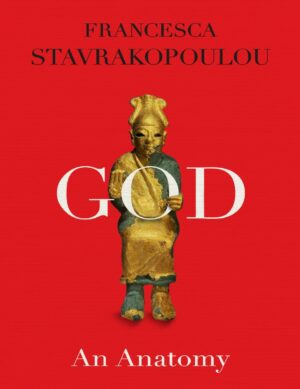
“God: An Anatomy” by Francesca Stavrakopoulou (2022 US edition)

🕵️🐷🕵️ zero-day🕵️🐷🕵️ "An astonishing and revelatory history that re-presents God as he was originally envisioned by ancient worshippers—with a distinctly male body, and with superhuman powers, earthly passions, and a penchant for the fantastic and monstrous. The scholarship of theology and religion teaches us that the God of the Bible was without a body, only revealing himself in the Old Testament in words mysteriously uttered through his prophets, and in the New Testament in the body of Christ. The portrayal of God as corporeal and masculine is seen as merely metaphorical, figurative, or poetic. But, in this revelatory study, Francesca Stavrakopoulou presents a vividly corporeal image of God: a human-shaped deity who walks and talks and...>>

“C.G. Jung’s Archetype Concept: Theory, Research and Applications” by Christian Roesler

"The concept of archetypes is at the core of C.G. Jung’s analytical psychology. In this interesting and accessible volume, Roesler summarizes the classical theory of archetypes and the archetypal stages of the individuation process as it was developed by Jung and his students. Various applications of archetypes, in cultural studies as well as in clinical practice, are demonstrated with detailed case studies, dream series, myths, fairy tales, and so on. The book also explores how the concept has further developed as a result of research and, for the first time, integrates findings from anthropology, human genetics, and the neurosciences. Based on these contemporary insights, Roesler also makes a compelling argument for why some of Jung’s...>>

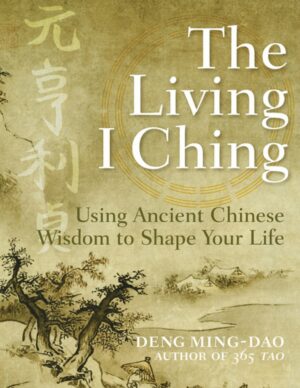
“The Living I Ching: Using Ancient Chinese Wisdom to Shape Your Life” by Deng Ming-Dao

"Known widely as a tool for predicting the future, the I Ching is also a repository of three thousand years of philosophy. Its basic premises are simple: that all the world changes, that change is driven by impersonal forces that can be seen in terms of yin and yang, and that all change is cyclical. The wise person harmonizes with the great cycles of change, and, in order to be a master of change, must understand the I Ching. With this new translation, Deng Ming-Dao, a leading authority on Taoist practice and philosophy, recovers the true wisdom of this ancient classic. The language is friendly, open, and welcoming, and a breathtaking watercolor by the author...>>
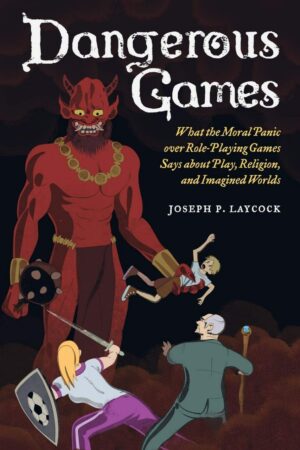
“Dangerous Games: What the Moral Panic over Role-Playing Games Says about Play, Religion, and Imagined Worlds” by Joseph P. Laycock

"The 1980s saw the peak of a moral panic over fantasy role-playing games such as Dungeons and Dragons. A coalition of moral entrepreneurs that included representatives from the Christian Right, the field of psychology, and law enforcement claimed that these games were not only psychologically dangerous but an occult religion masquerading as a game. Dangerous Games explores both the history and the sociological significance of this panic. Fantasy role-playing games do share several functions in common with religion. However, religion―as a socially constructed world of shared meaning―can also be compared to a fantasy role-playing game. In fact, the claims of the moral entrepreneurs, in which they presented themselves as heroes battling a dark conspiracy, often...>>